Ask someone in Gurugram what 28 August 2026 is and you will hear Raksha Bandhan. Ask in Mumbai's koliwadas and you will hear Narali Purnima. Ask in Kanchipuram and you will hear Avani Avittam. Ask at the Amarnath cave and you will hear that the yatra ends that day.
All four are right. Shravan Purnima is the most densely occupied tithi in the Hindu year, and the reason is worth understanding: it is the closing full moon of the monsoon month, which makes it simultaneously an ending, a renewal, and a resumption. Different communities picked up different parts of that.
1. Raksha Bandhan — the North
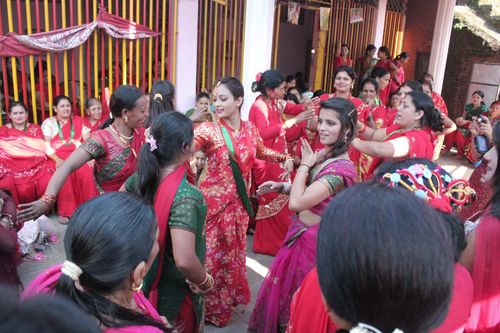
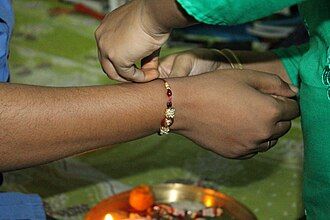
The thread of protection, tied by sisters on brothers' wrists. In 2026 the Purnima tithi runs from about 09:10 AM on 27 August to about 09:50 AM on 28 August for Delhi, and Bhadra clears before sunrise on the 28th — an unusually clean year. Details in Raksha Bandhan 2026: 27 or 28 August?
2. Narali Purnima — the Konkan coast
Along the Maharashtra and Goa coastline, the Koli fishing communities offer coconuts — naral — to the sea.
This is not symbolic gratitude in the abstract. The monsoon closes the sea. Boats do not go out; the fishing ban holds while the water is violent and the fish are spawning. Narali Purnima marks the moment the sea is addressed, appeased, and reopened. The coconut goes into the water, the boats are decorated, and the season resumes.
It is one of the clearest surviving cases of a festival that is also a fisheries management calendar — a closed season with a ritual attached, kept for centuries before anyone wrote it into policy.
3. Yajur Upakarma — Avani Avittam
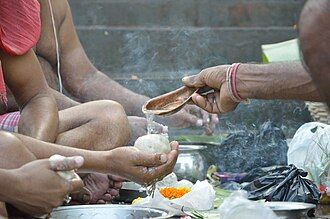
In Tamil Nadu, Kerala and among Yajurvedi brahmins elsewhere, Shravan Purnima is Upakarma: the day the sacred thread, the yajnopavita, is changed.
The word means to begin again. The old thread is discarded, a new one worn, and the year's Vedic study is formally recommenced with prayaschitta for lapses in recitation. The associated Gayatri Japam typically follows the next day, when the mantra is recited in large count.
The Veda-shakha determines the day: Yajur Upakarma on Shravan Purnima, Rig Upakarma on the Shravana nakshatra day of the month, Sama Upakarma later in Bhadrapada. Families following different shakhas in the same street will observe on different dates, which is entirely correct.
4. Gayatri Jayanti and Sanskrit Diwas
A number of traditions observe Gayatri Jayanti on Shravan Purnima, in connection with the Upakarma and the Gayatri Japam that follows it. Others place it on Jyeshtha Shukla Ekadashi. Both are held; follow your parampara.
The Government of India observes Sanskrit Diwas — Sanskrit Day — on Shravan Purnima, precisely because of the Upakarma association with the recommencement of Vedic study. In 2026 that is 28 August. Expect school programmes, university events and a great deal of well-meaning content about the world's most systematic language.
5. Pavitropana, Jhulan, and the Vaishnava close
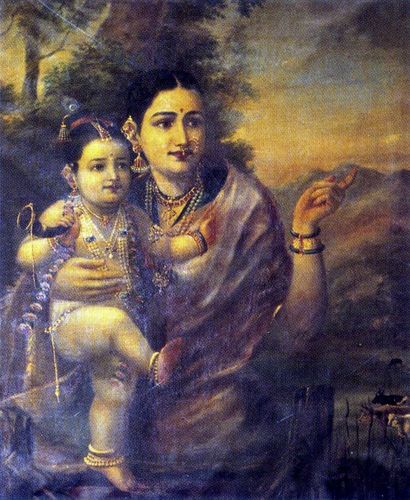
In Gujarat and parts of western India, Shravan Purnima is Pavitropana, when a sacred thread is offered to the Shivalinga, closing out a month of Shiva worship. In Vaishnava temples, the Jhulan Yatra — the swing festival for Radha and Krishna, running through the second half of Shravan — concludes on this Purnima.
The pattern repeats: something ends, something is renewed.
6. The Amarnath Yatra concludes
The Amarnath Yatra traditionally closes on Shravan Purnima, when the Chhari Mubarak — the ceremonial mace of Lord Shiva — is carried to the holy cave in a procession led by the Mahant of the Dashnami Akhara. The 2026 yatra ran from 3 July to 28 August.
The ice lingam at the cave waxes and wanes with the Moon and reaches its fullest around the Purnima, which is why the yatra's climax is set here rather than at a convenient point in the weather window.
Why one tithi carries all of this
Shravan Purnima sits at a structural hinge. It closes the Purnimanta month of Shravan in North India — Sawan 2026 runs 30 July to 28 August. It falls inside Chaturmas, the four-month period of restraint that began with Devshayani Ekadashi and will not release until Devuthani Ekadashi in November. And it lands as the monsoon turns.
A civilisation that keeps its calendar by the Moon will inevitably load its endings onto full moons. Shravan Purnima is where the loading is heaviest: sea reopened, thread renewed, study restarted, protection promised, pilgrimage completed.
Also worth knowing: a deep partial lunar eclipse falls on this same date in 2026, and it is not visible from India, so no sutak applies and none of the above is disturbed. See Chandra Grahan on Raksha Bandhan 2026.
What to actually do on 28 August
- Tie the rakhi in the morning window if you want the strict tithi.
- If you keep Upakarma, arrange the thread and the Gayatri Japam with your family's purohit — the shakha decides the day.
- If your family keeps Satyanarayan Puja for month-end merit, this is the traditional day for it as Sawan closes.
- Coastal families: the naral, the boat, the sea.
- Whatever else: this is the last day of Sawan in the North. If you meant to keep something this month and did not, this is the closing edge.
Common questions
What date is Shravan Purnima 2026?
Friday, 28 August 2026. The tithi runs from about 09:10 AM on 27 August to about 09:50 AM on 28 August for Delhi.
Is Avani Avittam on the same day as Raksha Bandhan in 2026?
For Yajurvedi observers, yes — Yajur Upakarma falls on Shravan Purnima. Rig and Sama Upakarma fall on other days.
Does Shravan end on this day everywhere?
No. Purnimanta North India ends Shravan here. In Maharashtra, Gujarat, Karnataka, Goa and the South, Amanta Shravan runs 13 August to 11 September 2026.
Is Sanskrit Diwas always on Shravan Purnima?
Yes, it is fixed to that tithi rather than to a Gregorian date, so it moves each year.
Timings for New Delhi, drik convention. Regional and sampradaya practice varies; follow your family's panchang and purohit.