Krishna Janmashtami 2026 is widely listed on Friday, 4 September, with the midnight birth moment falling just after 12 AM on the 5th. You may nonetheless encounter calendars marking the 5th as the festival day. Both can be printed by competent panchangs, and neither is a typo.
The reason is that Janmashtami is defined by two conditions rather than one, and when those conditions come apart, two traditions resolve the conflict differently.
The two conditions
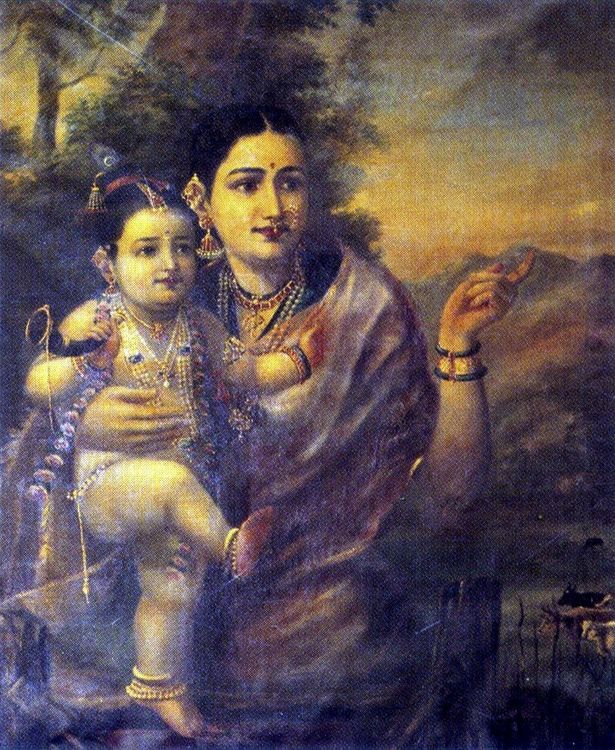
Krishna was born, in the traditional account, at midnight, on the Ashtami tithi of Krishna Paksha in the month of Bhadrapada, under the Rohini nakshatra.
So the festival needs Ashtami and it needs Rohini, and it needs them at midnight. Tithis and nakshatras run on different clocks — a tithi is a Sun–Moon angular relationship, a nakshatra is the Moon's position against the fixed stars. They drift independently. In many years Ashtami and Rohini overlap neatly at midnight and there is a single date. In other years they do not, and a choice has to be made about which condition governs.
How the two traditions resolve it
Smarta. The Smarta reckoning, followed by most households that do not belong to a specific Vaishnava sampradaya, gives priority to Ashtami at midnight. If the Ashtami tithi is running at the nishita kaal — the middle portion of the night — that is Janmashtami, whether or not Rohini has arrived.
Vaishnava. The Vaishnava reckoning gives greater weight to the conjunction of Ashtami with Rohini, and additionally prefers the tithi to be current after sunrise. Where these conditions land on the following day, the Vaishnava date is the later one. This is why, when Janmashtami is listed on two consecutive days, the second is the Vaishnava date.
A related consequence concerns parana, the breaking of the fast. Smarta practice generally allows parana after the nishita puja or the next sunrise. Strict Vaishnava practice holds the fast until both Ashtami and Rohini have ended, which in some years pushes parana well into the second day — occasionally producing a fast of nearly forty-eight hours. The Dharmasindhu itself provides for those who cannot sustain two days to break after the next sunrise.
For 2026
The widely published date across North India is Friday, 4 September, with the midnight moment shortly after 12 AM on 5 September and Rohini in the frame around it.
North India tends towards unanimity on Janmashtami in recent decades, and a large part of the reason is institutional: ISKCON publishes a single global calendar, its temples are the most visible Janmashtami venues in most cities, and households increasingly synchronise to whatever the local ISKCON mandir is doing. If you keep the Vaishnava reckoning, check the ISKCON or your sampradaya's calendar rather than a general festival listing — that is the authoritative source for your date, and it also governs your parana.
What we would not do is treat the discrepancy as a scandal. Two rules, applied honestly to an awkward year, give two answers. This is what a calendar built on real astronomy rather than fixed dates looks like from the inside.
The nishita kaal, and why midnight
Most Hindu festivals are observed by day. Janmashtami is one of a small set observed at night, and specifically at nishita kaal — the midpoint of the night, computed from local sunset and sunrise rather than from the clock. In Delhi it typically falls somewhere close to midnight, but it is a computed moment, not 00:00.
The reason is doctrinal. Krishna is born in a prison, at the darkest hour, to parents whose previous children have been killed, under a regime that is actively hunting him. The midnight is not incidental colour; it is the claim. The avatara arrives at the point of maximum darkness, which is the structural argument the Bhagavata is making about how dharma reasserts itself.
Which is also why the observance is a night vigil rather than a morning puja.
What is done
- Fast through the day. Phalahar is standard; some keep nirjala until the midnight puja. Grains are avoided.
- Jhulan and shringar. A cradle for the infant Krishna, the murti bathed, dressed and ornamented. In many households the family's Laddu Gopal is the centre of the day.
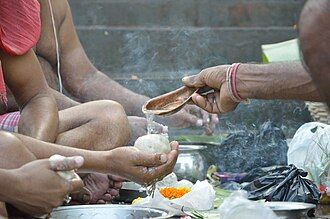
- Nishita puja at the computed midnight. Abhishek with panchamrit, then offerings — makhan, mishri, and the panjiri or dhaniya panjiri that is specific to this festival.
- Recitation. The tenth canto of the Bhagavata Purana, or the Gita, or the Vishnu Sahasranama. The Bhagavata's tenth canto is the direct textual home of the Krishna story.
- Parana per your tradition, as above.
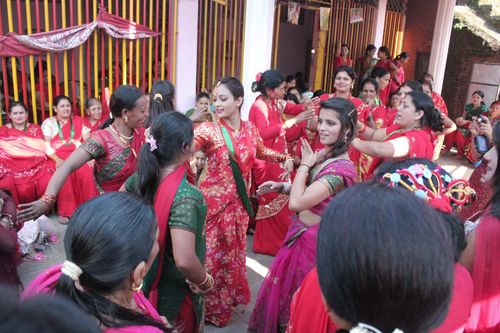
Regionally: Dahi Handi in Maharashtra on the following day, Krishna Leela and Mathura–Vrindavan's night-long observances in Braj, Sri Jayanthi and Gokulashtami forms in the South with kolam footprints drawn from the door inward, and the Nandotsav that follows the next morning.
If you are keeping it for the first time
Keep it simple and keep it accurately. A fast you can hold, a cradle, a lamp, the tenth canto or even a single chapter of it read aloud, and the midnight puja. The elaborate versions are optional; the vigil is the festival.
For the story itself and the theology around the avatara, see our profile of Krishna.
Common questions
What is the date of Janmashtami 2026?
Friday, 4 September 2026 is the widely published date, with the nishita midnight moment falling just after 12 AM on 5 September.
Why do some calendars show two Janmashtami dates?
Smarta reckoning prioritises Ashtami at midnight; Vaishnava reckoning weights the Ashtami–Rohini conjunction and the post-sunrise tithi. When these fall on different days, two dates are printed and the later one is the Vaishnava date.
When should the fast be broken?
Smarta practice permits parana after the midnight puja or the next sunrise. Strict Vaishnava practice waits until both Ashtami and Rohini have ended.
Is Dahi Handi on the same day?
No, it is observed the following day in Maharashtra, along with Nandotsav.
Timings for New Delhi on the drik convention. Nishita kaal is computed locally; if you observe outside India, use a local panchang. For the Vaishnava date and parana, follow your sampradaya's calendar.