If you have ever been mildly confused about which Teej your family keeps, you are in good company. There are three, they fall within a month of each other, they share a deity and a theme, and popular content routinely blurs them into one.
In 2026 they land like this:
| Festival | 2026 date | Tithi | Kept mainly in |
|---|---|---|---|
| Hariyali Teej | Saturday, 15 August | Shravan Shukla Tritiya | Rajasthan, UP, Haryana, Punjab, MP |
| Kajari Teej | Monday, 31 August | Bhadrapada Krishna Tritiya | Marwar and Bundelkhand, parts of UP and MP |
| Hartalika Teej | Sunday, 13 September | Bhadrapada Shukla Tritiya | MP, Chhattisgarh, Bihar, Jharkhand, Maharashtra, UP |
All three sit on a tritiya — the third tithi. That is where the name comes from: teej is simply the third. Three tritiyas in succession, alternating between the waxing and waning halves, produce three festivals.
Hariyali Teej — 15 August 2026
Shravan Shukla Tritiya. The green Teej, and the one most tied to the monsoon itself. Hariyali is greenery; the festival arrives when the rains have taken and the land has turned.
The commemoration is the reunion of Shiva and Parvati — the day, in the traditional account, that Shiva accepted Parvati after her long austerity across successive births. Married women fast and pray for their husbands' wellbeing and for marital harmony; unmarried girls for a good match.
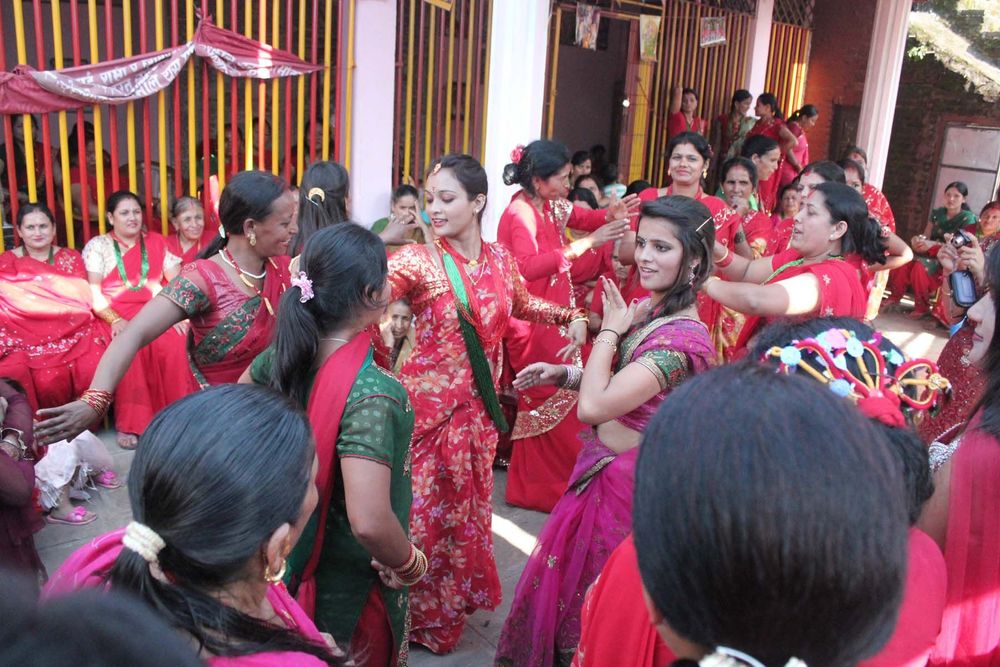
What it looks like: green clothes and green bangles, mehndi, the jhoola — swings hung from trees, which is the visual signature of the festival — ghevar and other sweets, and in Rajasthan the well-known Teej procession in Jaipur where a Parvati palanquin is taken through the old city.
The fast is generally not nirjala. Phalahar is common, and in many families it is a day of festivity more than austerity. In 2026 it happens to fall on Independence Day, which will make for a crowded Saturday.
Kajari Teej — 31 August 2026
Bhadrapada Krishna Tritiya. Also called Kajali or Badi Teej — badi because it comes after Hariyali and is treated as the larger of the two in the regions that keep it.
The name is disputed and both readings are current: kajari from kajal, the darkness of the rain clouds, and from the black-tinged form of the neem branch central to the puja. In Marwar and Bundelkhand this is the significant Teej, not Hariyali.
The practice is distinctive. A neem branch is worshipped. The fast is broken only after the moon has risen and been offered water. Women eat sattu, and there is a strong emphasis on giving before eating — the food is offered to a cow first in many households. The songs are older and heavier than Hariyali's, closer to the barahmasa tradition of a woman waiting out the twelve months.
Kajari Teej falls three days after Raksha Bandhan in 2026, which in Marwari households makes for a compressed festive week.
Hartalika Teej — 13 September 2026
Bhadrapada Shukla Tritiya. The austere one, and the one most often meant when someone says simply Teej vrat.
The name carries its story. Harat — abducted; alika — the friend. In the account, Parvati's companions carried her away into forest so she would not be married to Vishnu against her wish, and there she performed the tapasya by which Shiva was won. The festival honours the choosing, not the wedding.
The fast is traditionally nirjala — without food or water, and in strict observance without sleep, held through the night with jagran and puja. Sand or clay images of Shiva, Parvati and Ganesha are made and worshipped. It is broken the following morning.
This is a genuinely demanding vrat, and the tradition itself provides for exemption: the ill, the pregnant, nursing mothers, the elderly and the very young are not expected to keep nirjala. A phalahar or a partial fast kept with shraddha is the correct observance for anyone whose body cannot hold the strict form. This is not a concession invented recently — the Dharmashastra treatment of vrat consistently subordinates form to capacity.
Hartalika falls the day before Ganesh Chaturthi in 2026, on 13 September, with Ganeshotsav beginning 14 September. In Maharashtra the two run into each other; in Karnataka the adjacent Swarna Gowri Vrata sits in the same slot.
What the three have in common, and where they diverge
All three are Parvati festivals, all three are kept principally by women, and all three sit on the same theme: the deliberate choosing of a partner and the sustaining of that choice through effort rather than luck. Parvati in these stories is not given to Shiva. She takes him, across lifetimes, by tapasya.
The divergence is in register.
- Hariyali is celebratory — the union achieved. Swings, green, sweets, procession.
- Kajari is patient — the waiting. Moonrise, sattu, the neem, the long songs.
- Hartalika is austere — the effort itself. Nirjala, jagran, clay images made by hand.
Read in sequence they form something like a single arc, which is probably not accidental in a calendar assembled over centuries.
So which one is yours?
The honest answer is: whichever your mother's household kept, and if that is unclear, whichever your region keeps. There is no hierarchy among them and no requirement to keep all three. A Marwari family keeping Kajari and skipping Hariyali is not observing incorrectly, and neither is a Bihari family keeping only Hartalika.
If you are the first generation in your family to be working this out from the internet rather than from a grandmother — which is increasingly the case — pick the one your region keeps, keep it properly, and let the other two be knowledge rather than obligation.
Common questions
What is the difference between Hariyali and Hartalika Teej?
Hariyali is Shravan Shukla Tritiya, celebratory, with a non-strict fast. Hartalika is Bhadrapada Shukla Tritiya, roughly a month later, and traditionally nirjala.
Can unmarried women keep the Teej vrat?
Yes. In all three, unmarried girls traditionally keep it praying for a good marriage, which is the Parvati narrative applied directly.
Is Hartalika Teej the same as Gowri Habba?
They occupy the same slot and share the Parvati subject, but they are distinct observances with different regional forms.
What are the Teej 2026 dates?
Hariyali Teej 15 August, Kajari Teej 31 August, Hartalika Teej 13 September 2026.
Dates follow the Delhi panchang. Tritiya-based observances commonly shift by a day between regional panchangs; confirm locally.