For eleven days, parts of India live with a guest. He arrives on Ganesh Chaturthi, installed in homes and grand public pandals alike, and for those days he is fed, sung to, shown off to visitors, and treated as family. Then, on the last day, he is carried to the water and let go, with a promise on everyone's lips: come back soon, come again next year.
This is Ganesh Chaturthi, the birthday of Ganesha, and few festivals hold joy and farewell as closely together.
The arrival
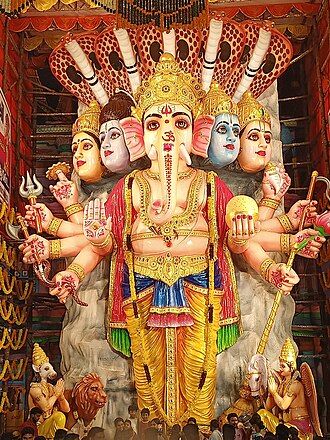
The festival begins on the fourth day of the bright fortnight of Bhadrapada. Clay images of Ganesha, from palm-sized to towering, are brought home and installed with the pran pratishtha, the ritual of inviting the deity to dwell in the image.
Then the days of seva begin. Ganesha is offered modak, the sweet dumpling he is said to love, along with durva grass and red flowers. There is aarti morning and evening, often the much loved Sukhkarta Dukhharta. Neighbours visit. Children sit close to the image. The house, for a little while, has a centre.
Why Maharashtra above all
Ganesha is worshipped everywhere, but the ten or eleven day public festival as we know it has a particular history. In the 1890s, Lokmanya Tilak grew the private household worship into a large public celebration, with community pandals, to bring people together across caste and to build a shared civic and national spirit under colonial rule. The festival's modern scale carries that intention still: it is one of the most public, most collective celebrations in the country.
The farewell
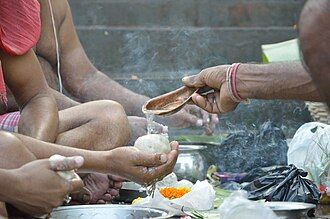
The eleven days end with Anant Chaturdashi and the visarjan, the immersion. The image is carried in procession, with drums and dancing and clouds of gulal, to a river, lake or the sea. There it is lowered into the water and dissolved.
The visarjan is the heart of the festival's meaning. The clay came from the earth and returns to it. The form we loved and fed for eleven days is released. Ganesha, the remover of obstacles, is also a teacher of letting go: hold the divine close, then surrender it, and trust the return.
A word on the water
The traditional image is unbaked clay, which dissolves cleanly. Much of what is immersed today is plaster of Paris with chemical paint, which does not. If you keep Ganesh Chaturthi, an eco clay murti, a home immersion in a bucket or drum with the soil later returned to a plant, or a permanent metal image worshipped symbolically, keeps the festival's spirit without harming the rivers Ganesha's devotees revere. The remover of obstacles should not be made into one for the water.
Keeping it at home
Bring a small clay Ganesha. Offer modak, even shop-bought. Do the aarti you know. Let the children sit with him. Keep him for a day, or three, or the full eleven, whatever your home allows. Then immerse him gently, say the words everyone says, and mean them.
Ganpati Bappa Morya. The festival's joy is real because its goodbye is real.