
Before any puja begins, before any new venture, before the wedding card is printed or the shop is opened, one name is written or spoken first: Shri Ganeshaya Namah. Ganesha is the deity of beginnings, the one worshipped before all others, and there is a story behind that privilege worth knowing.
How he came to be
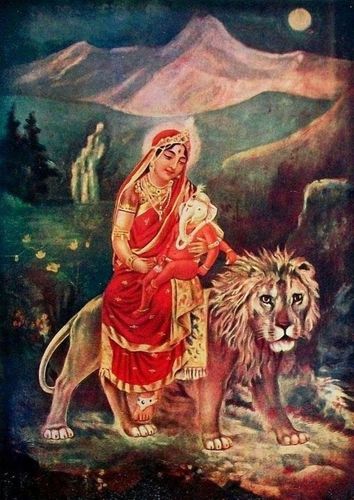
The best loved account comes from the Shiva Purana. Parvati, wanting someone of her own to guard her door, forms a boy from the turmeric and sandal paste of her own body and gives him life. She sets him to watch while she bathes, and tells him to let no one in.
Shiva returns and the boy, not knowing him, refuses him entry. In the conflict that follows, Shiva severs the boy's head. Parvati's grief is terrible. To console her, Shiva sends his attendants to bring the head of the first creature they find facing north, and they return with an elephant's head. Shiva fixes it on the boy and restores him to life. He then grants him a boon: this child will be worshipped first among all the gods, before any rite can succeed.
So the elephant head, which can seem strange to outsiders, carries deep meaning. It is the mark of a deity who died and was given new life, raised by Shiva himself to the head of the queue.
What the form teaches
Every part of Ganesha is read as a teaching. The large head, for thinking big and wisely. The small eyes, for concentration. The large ears, for listening more than speaking. The single tusk, the broken one, for keeping the good and letting go of the rest. The large belly, for digesting all that life brings, the sweet and the bitter alike. The mouse at his feet, for desire kept disciplined and made to serve rather than rule.
He holds an axe to cut attachments, a noose to draw the devotee closer, and a bowl of modak, the reward of a steady practice. He is unhurried, content, and entirely approachable.
Vighnaharta and Vighnakarta
Ganesha is Vighnaharta, the remover of obstacles. He is also, in the tradition, the one who places obstacles where they are needed, to slow the proud or to protect the unready. To worship him at the start of a venture is to ask not only for the road to be cleared, but for the wisdom to meet whatever is placed on it.
This is why he stands at thresholds and at the opening of every rite. He is the gatekeeper of his mother's door grown into the gatekeeper of all undertakings.
How he is approached
His worship is simple and warm. Sankashti Chaturthi, the fourth day of the dark fortnight each month, is kept for him, often with a fast until moonrise. Red flowers, durva grass and modak are his offerings. The mantra Om Gan Ganapataye Namah is enough for daily remembrance.
There is nothing distant about Ganesha. He is the household deity who removes the small daily snags as readily as the large ones, asked for help with an exam, a journey, a difficult conversation. Begin with him. That is, after all, exactly what he is for.