
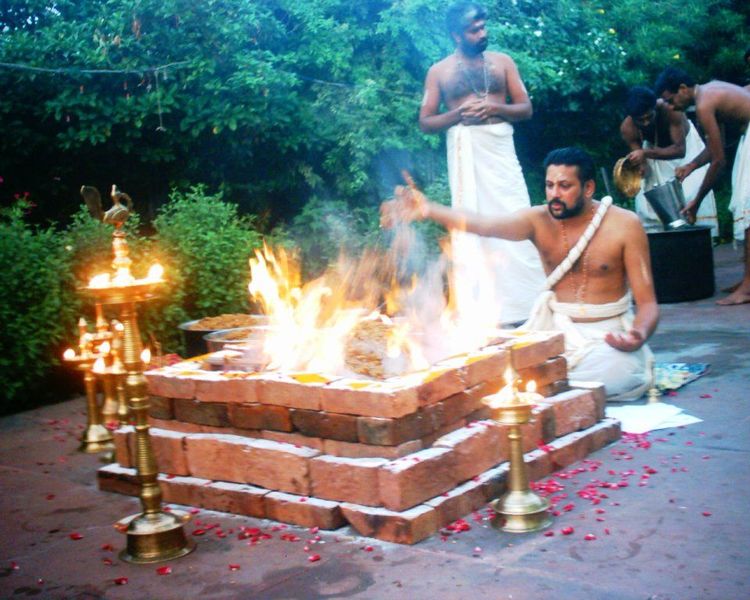
The first vidhi when you enter a new home
You have signed the papers. The movers have come and gone. The new home is yours. Before you sleep your first night there, before you eat your first meal, before you turn on the kitchen for the first time, tradition says one thing should happen first.
Griha Pravesh. The entering of the house.
This is not symbolic. The Vastu Shastra and the Grihya Sutras treat the act of first-entering a home as a serious threshold-crossing event, with specific consequences for the life that will be lived in that space. The vidhi varies by region, but its core elements are remarkably consistent across India.
This article walks you through what to do, in what order, and why.
When to perform it
The first decision is timing. Griha Pravesh must be performed on an auspicious muhurat. Random timing is not acceptable in the tradition.
The auspicious factors:
Months: Magha, Phalguna, Vaishakha, Jyeshtha (roughly February through June). Avoid Chaturmas (mid-July to mid-November when Vishnu is in yogic sleep). Avoid Pausha (December-January) due to its dakshinayana association.
Tithi: Shukla paksha (waxing fortnight) is strongly preferred. Within shukla paksha: 2nd, 3rd, 5th, 7th, 10th, 11th, 13th. Avoid the 4th, 9th, and 14th tithis (rikta tithis). Avoid full moon and new moon.
Nakshatra: Rohini, Mrigashira, Anuradha, Pushya, Hasta, Uttara Phalguni, Uttara Ashadha, Uttara Bhadrapada, Revati, Chitra, Dhanishta. These are the "fixed" and "soft" nakshatras most conducive to settling in.
Day: Monday, Wednesday, Thursday, Friday are preferred. Avoid Tuesday (Mangal's day) and Saturday (Shani's day) unless explicitly cleared by a pandit for your chart.
Time of day: The ceremony should ideally begin during the auspicious muhurta hours of the day, especially Abhijit Muhurta (around solar noon). Avoid Rahu Kaal.
The honest advice: consult a pandit before booking. The combinations matter. A good muhurat is the foundation; everything else builds on it.
Three types of Griha Pravesh
The shastras distinguish three:
Apoorva Griha Pravesh: First-time entry into a newly built home. The most consequential. Requires full vidhi.
Sapoorva Griha Pravesh: Entry into a previously occupied home after renovation or after the family has been away for a long time. A modified, lighter vidhi.
Dvandwah Griha Pravesh: Re-entry into the same home after natural disasters or unusual disturbances. The shortest vidhi.
Most modern Griha Pravesh ceremonies are some version of the first two, depending on whether the house is genuinely new or being moved into after another family.
What you need
Materials traditionally gathered the day before:
- A copper or brass kalash filled with water
- Mango leaves (5 to 7, to top the kalash)
- A coconut (placed on top of the kalash)
- Red cloth (to drape the kalash)
- Roli (red sacred powder), haldi (turmeric), rice (akshat)
- Diya (lamp), oil or ghee, cotton wicks
- Incense and dhoop
- Sandalwood paste
- Flowers (marigold, rose, or seasonal)
- Sweets (especially something with jaggery)
- Five fruits
- Camphor
- Cow dung (in traditional households; cow ghee is the modern substitute for purification)
- Idols or images of Ganesh, Lakshmi, the family kuldevata
- Two clay pots filled with rice, dal, or other grains (one for milk to be boiled)
You also need a pandit. A trained brahmin who can recite the mantras and conduct the homam is part of the traditional vidhi. Online pandit services and Sanatani trusts can arrange one for most cities.
The vidhi itself
The ceremony has roughly seven stages.
1. Threshold puja
Before anyone enters the house, a puja is performed at the main door. The kalash is set up. Ganesh is invoked first, always. Lakshmi is invoked for prosperity. The kuldevata (family deity) is invoked. The main door is anointed with kumkum, rice, and turmeric.
A small string of mango leaves and marigold is tied across the door as a toran. The dwarapalas (door guardians) are propitiated.
2. The first entry
The husband and wife enter together, with the wife stepping in first. She carries the kalash on her head, with the coconut on top. As she crosses the threshold, she steps over with the right foot first. Both touch the threshold with their hands before entering.
If the wife is unable to enter first (for any reason), the husband enters first with the kalash. In a single-occupant household, the resident enters with the kalash.
The family follows, also stepping with the right foot. Children come next. Then any extended family.
3. The kalash installation
The kalash, having been brought in, is placed in a designated spot in the main room or the puja area. It will remain there for the duration of the ceremony.
The kalash is the most important object in Griha Pravesh. It symbolizes the entry of auspiciousness, water (life), and the divine into the new home. The mantras recited over it are the mantras of welcome.
4. The homam
A sacred fire is lit. This is the central act of the vidhi. The pandit recites Vedic mantras while offering ghee, samagri (a specific herbal mixture), and grains into the fire.
The homam serves three functions: purification of the space (the smoke clears subtle energies), invocation of the deities to settle in the home, and consecration of the household's first fire (the kitchen fire will be lit from this).
A typical homam for Griha Pravesh lasts about 90 minutes to two hours.
5. The milk-boiling
A clay pot of milk is placed on a new stove or chulha for the first time. It is allowed to boil until it rises and overflows.
This is one of the most important moments of the ceremony. The overflowing milk symbolizes abundance, prosperity, and the home's first nourishment. The family watches it carefully and rejoices when it boils over.
A small amount of the milk is then made into kheer (sweet rice pudding). This is the first meal cooked in the home. It is offered first to the family deity, then to the pandit, then distributed to family members and guests.
6. The first meal
After the homam and the milk-boiling, the family takes its first meal together in the new home. The meal is satvik (vegetarian, no onion, no garlic). The kheer made from the boiled milk is included.
This first meal is a major moment. The home now has, in the tradition's terms, been fed. It will, in turn, feed its occupants.
7. The pandit's dakshina
After the ceremony, the pandit is offered dakshina (a gift, traditionally money along with a coconut, fruits, and grains). His blessing of the home and the family is the formal closing of the ceremony.
The kalash is left in place for at least 24 hours, sometimes longer, before being dismantled. The water from it is sprinkled in all corners of the home.
What to do for the first 40 days
Tradition recommends:
- Lighting a diya in the puja area every morning and evening
- Keeping the home clean and quiet
- Avoiding negative emotional outbursts in the new home for the first 40 days (the home's "settling" period)
- Inviting close family and friends to bless the home in the first month
- Performing satya narayan katha within the first three months
The 40-day rule is rooted in the idea that the home's vibrational character is being established during this period. What happens early shapes what comes later.
Common mistakes to avoid
Skipping the muhurat consultation. Random timing erodes the foundation. Even a small consultation saves trouble.
Moving in piecemeal before the formal Griha Pravesh. If you put your refrigerator and bed in last week and started sleeping there, the ceremony's effect is diminished. The tradition is to perform Griha Pravesh first, then move belongings in.
Renovating immediately after Griha Pravesh. The home needs to settle. Major renovation in the first six months is traditionally avoided.
Eating non-vegetarian or drinking alcohol on the day. The day itself is satvik. Whatever the family's regular diet, the day of Griha Pravesh is observed with discipline.
A closing note
Griha Pravesh is one of the more meaningful rituals in the Sanatani lifecycle. A home is where most of the rest of life will happen: relationships, children, work, illness, recovery, celebration, grief. Beginning that long arc with intention, with the right mantras, with the family's deities formally welcomed, is not superstition. It is the establishment of a setting.
The house has been a building. After Griha Pravesh, it becomes a home. The shift, in the tradition's view, is real.
Welcome the new space properly. The rest of your life there will rest on this foundation.