The first house, where you begin
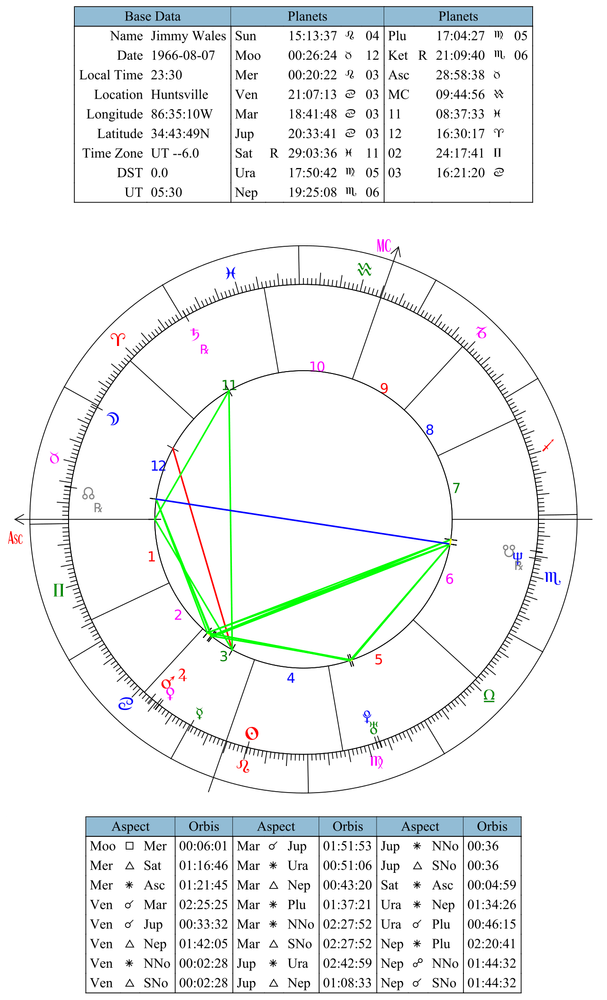
In any kundli, the twelve houses (bhavas) tell the story of a life. The first house, called the lagna or ascendant, is where the story begins.
The lagna is the rashi (zodiac sign) that was rising on the eastern horizon at the exact moment of your birth. It changes every two hours roughly, which means even people born on the same day, in the same place, but two hours apart, have different ascendants and substantially different charts.
This is why jyotish requires precise birth time and place, not just date. The Sun moves slowly. The Moon moves faster. The lagna moves fastest of all, and shapes the chart's entire structure.
This article walks through what the lagna actually is, why it matters more than your sun sign or moon sign in many ways, and how to read your lagna for what it tells about your life.
The mechanics
The earth rotates once on its axis every 24 hours, completing 360 degrees. The twelve rashis divide the ecliptic into 360 degrees, with each rashi spanning 30 degrees.
This means a new rashi rises on the eastern horizon every 2 hours (24/12). The rashi that was rising at your moment of birth is your lagna.
The remaining eleven houses are calculated from the lagna. The first house is your lagna rashi. The second house is the next rashi after it, the third house the one after that, and so on, until the twelfth house, which is the rashi immediately before your lagna.
This is the "whole-sign house" system, the oldest and most commonly used system in Indian jyotish. (Other systems exist, used in different schools.)
What the lagna represents
The first house, in classical texts, governs:
The physical body. The constitution, the appearance, the predominant doshic balance.
The personality. How you express yourself in the world, not how you feel internally (that is the moon's domain).
Vitality. The general life force, the energy of being alive.
The head and the brain. Physiologically, the first house corresponds to the head.
Early childhood. The first few years of life, before the chart's other houses fully activate.
Self-perception. How you see yourself, your sense of identity.
In modern Western terminology, the lagna is closest to what is called the "rising sign" or "ascendant," with similar functions.
The twelve lagnas
Each of the twelve possible lagnas gives a distinctive character to the chart.
Mesha (Aries) Lagna
Ruled by Mangal (Mars). Energetic, decisive, sometimes impulsive. Strong physical drive. Early childhood often shows precocious independence. The first house is afflicted by anger more often than other lagnas.
Vrishabha (Taurus) Lagna
Ruled by Shukra (Venus). Steady, sensual, prosperous. Strong physical body, often inclined toward stockiness. The deep satisfaction of physical comfort runs through the chart. Slow to start, hard to stop once moving.
Mithuna (Gemini) Lagna
Ruled by Budha (Mercury). Quick, communicative, intellectually flexible. The body is often lean, the mind is restless. Strong relationship with siblings and with information. The challenge: scattering.
Karka (Cancer) Lagna
Ruled by Chandra (Moon). Emotionally sensitive, nurturing, family-oriented. Strong connection to the mother and to the home. The body is often softer. The mind is moody, attuned to others.
Simha (Leo) Lagna
Ruled by Surya (Sun). Royal, magnanimous, demanding of respect. Strong vital energy. Often born to or seeks positions of authority. The challenge: pride.
Kanya (Virgo) Lagna
Ruled by Budha (Mercury). Analytical, careful, service-oriented. The body is often slim. Strong attention to detail. The challenge: anxiety, over-criticism (of self and others).
Tula (Libra) Lagna
Ruled by Shukra (Venus). Diplomatic, charming, partnership-oriented. The body is often graceful. The mind seeks balance. The challenge: indecisiveness.
Vrishchika (Scorpio) Lagna
Ruled by Mangal (Mars). Intense, probing, secretive. The body is strong, often with piercing eyes. Deep emotional currents. The challenge: holding onto resentment or hidden anger.
Dhanu (Sagittarius) Lagna
Ruled by Brihaspati (Jupiter). Optimistic, philosophical, expansive. Strong body, often tall. Strong drive toward knowledge and travel. The challenge: overconfidence.
Makara (Capricorn) Lagna
Ruled by Shani (Saturn). Disciplined, ambitious, slow-developing. The body is often wiry, with strong bones. Often achieves substantially in later life rather than early. The challenge: rigidity, melancholy.
Kumbha (Aquarius) Lagna
Ruled by Shani (Saturn), co-ruled by Rahu in many modern interpretations. Unconventional, idealistic, intellectually independent. The body is often lean and active. Strong service-orientation. The challenge: emotional detachment.
Meena (Pisces) Lagna
Ruled by Brihaspati (Jupiter). Compassionate, intuitive, spiritual. The body is often soft, the eyes large and expressive. Strong connection to the unseen. The challenge: escapism, lack of grounding.
Why the lagna matters more than the sun sign
In Western astrology, the sun sign (your birth month's zodiac) is usually treated as the primary indicator. In Indian jyotish, the lagna is more important.
The reasons:
The lagna is more specific. Your sun sign is determined by your birth date (and shifts only once a month). Your lagna is determined by your birth date, time, and place, and shifts every two hours. The lagna gives a much more precise individual signature.
The lagna structures the chart. The entire house system, the dasha system, and the dignity of every planet in your chart depends on which house each occupies. The lagna determines this.
The lagna governs the body. Western astrology's sun sign reading often focuses on personality and ego. Indian jyotish, with its more medical orientation, has the lagna governing the body's actual constitution, including health predispositions.
The lagna's lord is the lagna lord. The planet that rules your lagna rashi is called the lagna lord (lagnesh). The placement and strength of the lagnesh in the chart is one of the most important diagnostic factors in jyotish. Where your lagnesh sits, how dignified or afflicted it is, and what aspects fall on it, tell substantial parts of your life story.
How to find your lagna
To know your lagna, you need:
- Date of birth
- Exact time of birth (to the minute, ideally)
- Place of birth (city is sufficient, since the lagna calculation accounts for latitude and longitude)
A kundli generator (this platform has one, as do many others) will calculate your lagna from these three inputs.
A common issue: people born in hospitals often have their birth time recorded in their birth certificate to the nearest five or ten minutes. This is usually accurate enough for lagna calculation, but if your birth was particularly fast or slow within an hour boundary, even ten minutes can shift your lagna to the adjacent rashi. If your lagna feels strongly wrong when you read it, ask your parents for a more precise time; sometimes their memory is more accurate than what was recorded.
The chart as a whole
The lagna is the starting point but not the full chart. A complete reading involves:
- The lagna rashi and lagna lord: Your basic body and life-direction
- The moon sign (Chandra rashi): Your mental and emotional life
- The sun sign (Surya rashi): Your soul and your father
- The dashas: The planetary periods that activate at different times in life
- The aspects: Which planets influence which houses
- The yogas: Specific combinations that produce specific effects
A skilled jyotishi looks at all of these together. The lagna sets the stage. The other factors play across that stage.
A simple exercise
If you know your lagna, try this exercise:
Read the description of your lagna in the section above. Notice which parts feel accurate, which parts feel off. The accurate parts are likely the lagna's natural expression in your life. The inaccurate parts may reflect other planetary influences modifying the base lagna.
Then consider: do you know other people who share your lagna? They will not be your twins (so much else differs), but they will share certain bodily and personality features. The lagna is a real pattern. With practice, you can begin to recognize lagnas in people you meet.
This kind of practical pattern-recognition is how traditional jyotishis develop their skill: not by memorizing texts but by observing many charts, comparing them to the people who carry them, and refining their reading over years.
Closing
The lagna is one of the foundational elements of jyotish. Knowing your lagna is the first step in any serious engagement with your chart.
If you do not yet know yours, generate your kundli on this platform or any reliable kundli service. The information is freely available. The reading takes thirty seconds to compute.
The lagna does not determine you. But it describes the body and the personality structure within which the rest of your life unfolds. To know it is to know one of the most basic things about yourself.
The chart has been there since your birth. The lagna has been quietly shaping your life every day. Find out which one is yours. The rest of your jyotish journey starts from there.