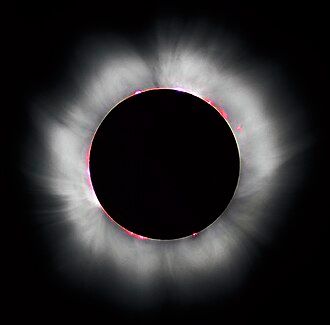
On Wednesday, 12 August 2026, a total solar eclipse will darken skies over the Arctic, Greenland, Iceland and the northern edge of Spain. It falls, as every solar eclipse must, on an Amavasya — in this case Shravan Amavasya, also observed in much of North India as Hariyali Amavasya.
The question arriving in every family WhatsApp group this week is not astronomical. It is ritual: sutak lagega ya nahi?
The answer is no. And the reason is not modernity or scepticism — it is the classical rule itself.
The rule, stated plainly
Sutak is the period of ritual withdrawal observed around a grahan: temples close their doors, cooked food is not kept, puja is suspended, and the elderly, ill, pregnant and very young are exempted from fasting. For a solar eclipse it runs four prahar — roughly twelve hours — before the eclipse begins. For a lunar eclipse it runs three prahar, roughly nine hours.
But the Dharmashastra texts attach sutak to a condition that popular calendars routinely drop: sutak is observed only where the grahan is visible. A grahan that cannot be seen from a place is, for ritual purposes, not a grahan at that place. This is why a pandit in Chennai and a pandit in Chicago can give different answers on the same date and both be correct.
The logic is coherent once you see it. The eclipse in the tradition is not a spreadsheet event; it is the Sun or Moon being visibly seized. Where nothing is seized in the sky above you, nothing is withdrawn from the ground beneath you.
Why 12 August is invisible from India
The path of totality on 12 August runs across the high northern latitudes and clips northern Spain at sunset. India lies far outside even the partial-visibility zone. At no point during the event is the eclipsed Sun above the Indian horizon in an eclipsed state.
The practical consequences:
- Temples in India need not close. If your local temple does close, that is a management decision or an abundance of caution, not a shastric requirement.
- No sutak fasting. No emptying of the kitchen. No suspension of daily puja.
- Shravan Amavasya observances go ahead normally — tarpan for ancestors, the Hariyali Amavasya tree-planting where that is your family custom, and the Sawan month niyam you have been keeping since 30 July.
- If you have a griha pravesh, mundan or vivah muhurat on or around 12 August, the eclipse does not disturb it in India.
If you are reading this outside India
For readers in Iceland, Spain, Portugal, Greenland or the northern Atlantic seaboard, the eclipse is visible and sutak does apply — computed from your local eclipse start, not from IST. Devotees in the UK and much of western Europe will see a deep partial eclipse and should follow local visibility.
Never view a solar eclipse with the naked eye, through smoked glass, X-ray film or sunglasses. Only certified solar filters or pinhole projection are safe. This is not a ritual instruction; it is retinal physics, and permanent damage is painless while it happens.
What a grahan actually does to a chart
Here is where most eclipse content collapses into fear-selling, so let us be exact about it.
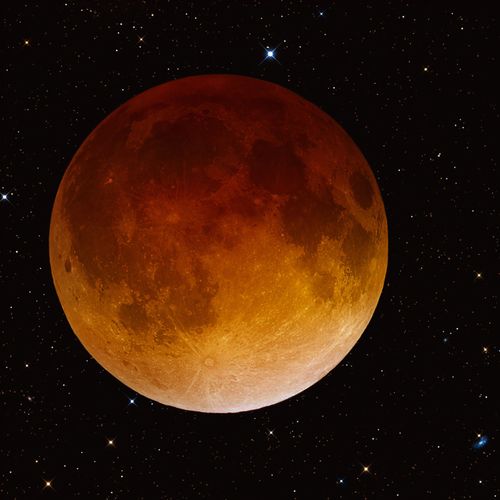
An eclipse is a Rahu–Ketu event. The Sun and Moon meet at or near the lunar nodes, which is why eclipses arrive in pairs roughly two weeks apart and why they migrate slowly backwards through the rashis over an eighteen-year cycle. The 12 August eclipse sits on that nodal axis, and the partial lunar eclipse of 28 August completes the pair.
Whether that axis touches you depends entirely on your own kundli — which house the eclipse degree falls in, whether it aspects a sensitive natal placement, and whether your running mahadasha or antardasha belongs to Rahu, Ketu, Surya or Chandra. For a person whose chart has nothing live on that axis, an eclipse fortnight is an ordinary fortnight. For a person in a Rahu antardasha with the eclipse degree on a natal Moon, it is worth reading properly.
That distinction — the eclipse alone tells you almost nothing; the eclipse against your chart tells you something — is the whole of honest phalita jyotisha on this subject. Any page that promises you twelve rashi-wise predictions from one eclipse is selling generic copy to twelve audiences at once.
Both August 2026 eclipses, side by side
| Event | Date (IST) | Type | Visible in India | Sutak in India |
|---|---|---|---|---|
| Surya Grahan | 12 August 2026 | Total solar | No | No |
| Chandra Grahan | 28 August 2026 | Deep partial lunar | No | No |
The second one falls on Raksha Bandhan, which has produced a great deal of anxious speculation about whether rakhi can be tied. It can. We have written that up separately in Chandra Grahan on Raksha Bandhan 2026.
The next one that will matter here
Mark 2 August 2027. That total solar eclipse crosses North Africa and the Middle East with an unusually long duration and is partially visible from parts of western India. That is the date on which sutak will genuinely apply in Indian cities, and the date worth planning around.
Common questions
Is there any grahan visible from India in August 2026?
No. Neither the 12 August solar nor the 28 August lunar eclipse is visible from anywhere in India.
Should I avoid eating during the eclipse hours on 12 August?
There is no shastric basis for doing so in India this time, because sutak does not apply where the eclipse is invisible. If your family keeps the practice out of habit or comfort, no harm follows from that either.
Can pregnant women go outdoors on 12 August?
Yes. The traditional cautions around eclipses are tied to a visible eclipse and its sutak window. Neither exists in India on this date.
Does the eclipse cancel my Sawan Somwar vrat?
No. The third Sawan Somwar is 17 August, five days after the eclipse, and is unaffected.
Dates and timings follow the Delhi panchang and the drik convention. Regional panchangs and sampradaya practice can differ by a day on tithi-based observances; where your family follows a specific parampara, follow that.