The five elements of the Hindu day
Most Sanatanis check the panchang at least sometimes. Before a wedding. Before a journey. Before a major purchase. The grandmother in the household consults it every morning. The pandit lives by it.
But for most modern Sanatanis, what the panchang actually contains and what its terms mean is a half-remembered set of words. Tithi, Nakshatra, Yoga, Karana, Vara. The five elements that give the panchang its name. Let me walk you through each.
What panchang means
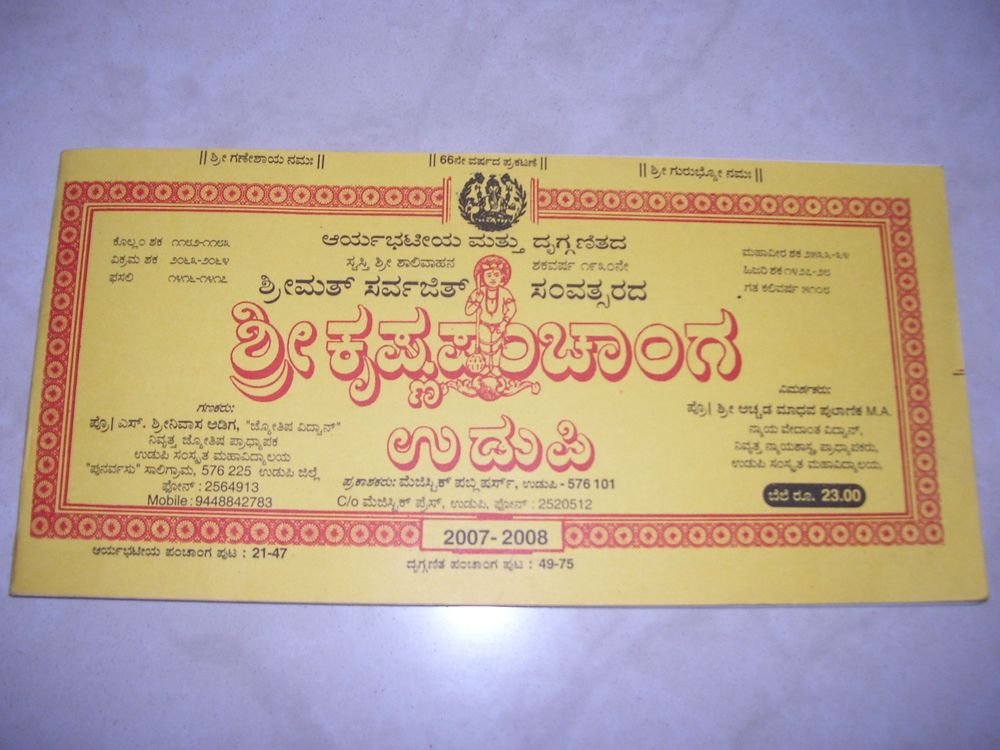
Panchang, from Sanskrit "panch ang" (five limbs), is the traditional Hindu calendar. Unlike the solar Gregorian calendar, it is luni-solar, tracking both the moon's phases and the sun's position. Each day is described by five astronomical parameters. Knowing these tells you the day's character, its auspicious and inauspicious portions, and what kinds of activity it favors.
A panchang is not a horoscope. A horoscope is personal. A panchang is the day itself, universal, the same for everyone in a given location.
The five limbs
1. Vara (the weekday)
The simplest element. Seven weekdays, each ruled by one of the seven primary grahas:
- Ravivara (Sunday): Surya, the sun
- Somavara (Monday): Chandra, the moon
- Mangalvara (Tuesday): Mangal, Mars
- Budhavara (Wednesday): Budha, Mercury
- Brihaspativara (Thursday): Brihaspati, Jupiter
- Shukravara (Friday): Shukra, Venus
- Shanivara (Saturday): Shani, Saturn
Each weekday carries the quality of its ruling planet. Thursday is favorable for spiritual matters and teachers (Jupiter). Friday for marriage and beauty (Venus). Saturday for discipline and service (Saturn). The weekday is the day's broadest signature.
2. Tithi (the lunar day)
The most important panchang element for festivals and vrats. A tithi is the time taken for the moon to gain 12 degrees on the sun. There are 30 tithis in a lunar month, divided into two pakshas (fortnights):
- Shukla paksha: waxing fortnight, from new moon to full moon
- Krishna paksha: waning fortnight, from full moon to new moon
The tithi numbers run 1 to 14 in each paksha, plus Purnima (full moon) ending Shukla and Amavasya (new moon) ending Krishna.
Most Hindu festivals are tithi-fixed. Ekadashi vrat is the 11th tithi of either paksha. Sankashti Chaturthi is the fourth of Krishna paksha. Diwali falls on Amavasya. Holi on Phalguna Purnima. The lunar month, not the solar date, determines when these arrive.
Tithis can also be auspicious or inauspicious for specific activities. The four "rikta" tithis (Chaturthi, Navami, Chaturdashi of either paksha, and Ashtami) are traditionally avoided for new ventures. Purnima and Amavasya are emotionally heavy days, often felt physically by sensitive people.
3. Nakshatra (the lunar mansion)
The sky in jyotish is divided into 27 nakshatras, each spanning 13 degrees 20 minutes of the ecliptic. The moon takes about one day to traverse one nakshatra. The nakshatra in which the moon sits at sunrise is the day's nakshatra.
The 27 nakshatras have personalities and rulers. Rohini is gentle and fertile, ruled by Brahma. Mrigashira is curious and seeking, ruled by Soma. Ashlesha is intense and probing, ruled by the Nagas. Magha is regal and ancestral, ruled by the Pitrs.
Each nakshatra favors specific activities and disfavors others. Pushya is universally auspicious, favoring all beginnings. Bharani is intense and not ideal for new ventures. Mula and Jyeshtha have particular taboos around marriage. A jyotishi planning a major muhurat will spend more time on nakshatra than on any other element.
4. Yoga (the sun-moon angle)
Less famous than tithi and nakshatra, but classical. The yoga is the sum of the longitudes of the sun and moon, divided into 27 named segments. The current yoga at sunrise is the day's yoga.
There are 27 yogas, of which some are auspicious (Siddhi, Shubha, Sukarma, Dhriti) and some inauspicious (Vyaghata, Vajra, Vyatipata, Vaidhriti). The classical panchang will mark out yoga-based prohibitions: avoid travel during Vyaghata, avoid new ventures during Vyatipata.
For most everyday observers, yoga is the panchang element you can defer to a pandit. It is real but technical.
5. Karana (half-tithi)
Each tithi contains two karanas, so there are 60 karana periods in a lunar month. Of these, 11 unique karanas repeat in a regular pattern. Four "fixed" karanas (Shakuni, Chatushpada, Naga, Kintughna) occur only around Amavasya and are considered carriers of particular weight, both auspicious and inauspicious depending on activity.
The seven "moving" karanas (Bava, Balava, Kaulava, Taitila, Garaja, Vanija, Vishti) cycle through the month. Vishti (also called Bhadra) is the most consequential: it is universally inauspicious for new beginnings. A wedding, a griha pravesh, an important start should not begin in Bhadra Karana. The panchang will mark Bhadra periods explicitly.
How to actually read a panchang
When you open the panchang on this platform or any traditional one, you will see something like:
Tithi: Shukla Paksha Saptami till 14:23, then Ashtami Nakshatra: Mrigashira till 08:47, then Ardra Yoga: Saubhagya till 19:12 Karana: Vanija till 14:23, then Vishti till 02:58 Vara: Brihaspativara
Read this as a snapshot of the sky's structure. The tithi tells you the lunar phase and any associated vrat. The nakshatra tells you the moon's position and the day's primary emotional flavour. The yoga tells you the sun-moon harmony. The karana flags any inauspicious half-day windows. The vara names the day's ruling graha.
The shifts (till 14:23) matter. If you are planning anything important, you want the auspicious factors to overlap and the inauspicious factors to be elsewhere. A skilled pandit reads the day as a sequence of windows, not as a single character.
Other panchang elements worth knowing
Beyond the five limbs, a complete panchang also gives:
- Sunrise and sunset: Anchor times for everything else
- Rahu Kaal, Yamaganda, Gulika Kaal: Daily inauspicious 90-minute windows
- Abhijit Muhurta: The auspicious midday window (around solar noon)
- Choghadiya: Eight 90-minute windows giving fine-grained auspicious/inauspicious readings
- Disha Shool: The direction not to travel in on that day
- Samvat year: Vikram Samvat, Shaka Samvat, Kali Samvat
- Masa: The lunar month (Chaitra, Vaishakha, etc.)
- Ritu: The season (Vasanta, Grishma, Varsha, Sharad, Hemanta, Shishira)
For someone learning, focus on the five limbs first. The rest is layered detail.
A note on regional variation
Different traditions calculate the panchang slightly differently. The major schools are:
- Drik Siddhanta: Astronomical, used widely in north India
- Vakya Siddhanta: Older mathematical system, used in parts of south India
- Surya Siddhanta: Classical text-based, used in some Telugu and Tamil traditions
Tithi and nakshatra can differ by a day across schools, especially near transition times. This is why your grandmother's panchang from one region might disagree with the one your priest uses in another. Both can be correct, in different traditions.
Why this matters now
In an age where every device tells you the Gregorian date and nothing else, knowing the panchang elements is knowing the rhythm of your tradition. Festival dates suddenly make sense. Why Diwali shifts each year. Why Ekadashi falls twice a month. Why your grandmother woke before dawn on certain days but not others.
Panchang is not obsolete. The sky has not changed. The methods of reading it have been refined for three thousand years and are now available in your pocket. Open it tomorrow morning. Read the five limbs of the day. Notice what they say. Plan accordingly.