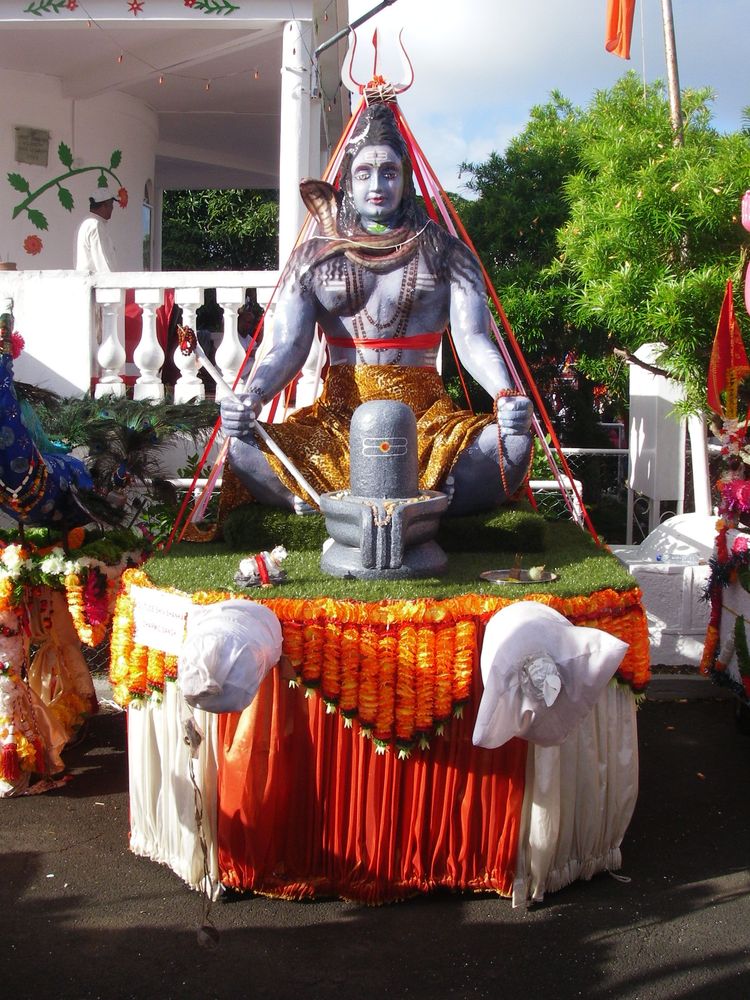
A night for Shiva that asks for nothing else
In the dark fortnight of the lunar month of Phalguna, on the night before the new moon, falls the festival of Maha Shivratri. The Great Night of Shiva. In 2027, it falls on the night of 6 March.
It is not, like most other Sanatani festivals, a celebration. The lamps are lit, but no fireworks. The temples are open through the night, but no garlands hang in the streets. Devotees keep vigil but do not feast. The mood is one of disciplined awareness: a single long night turned inward, toward the deity who is himself silent.
This is unlike any other festival in the calendar. It walks through what Maha Shivratri is, what to do on the night, and why this particular night, of all the nights of the year, is held to be the most receptive to Shiva.
What the night is
Maha Shivratri is a chaturdashi tithi (fourteenth day) of krishna paksha (dark fortnight) in the month of Phalguna. In 2027, this is the night of 6 March, with the actual vigil running from sunset on 6 March until sunrise on 7 March.
Several stories anchor the night.
The Shiva and Parvati marriage. By one tradition, Maha Shivratri is the night Shiva and Parvati were married. The night is therefore especially auspicious for unmarried women seeking a good husband, who fast and pray for blessings on this day.
The first lingam. By another tradition, the Shiva Lingam first manifested in the form of a pillar of light on this night, in the cosmic dispute between Brahma and Vishnu. Shivratri commemorates this self-manifestation.
The Samudra Manthan. During the churning of the cosmic ocean, the deadly halahala poison emerged. Shiva drank it to save the universe, holding it in his throat (which turned blue, giving him the name Neelkanth). The devas kept vigil through the night while Shiva endured the poison's heat. This vigil is now repeated by devotees every Maha Shivratri.
The Tandava connection. Some traditions hold that Maha Shivratri is the night Shiva performs the cosmic Tandava, his dance of creation, preservation, and destruction. The night of Maha Shivratri sits at a particular position in the cosmic rhythm where Shiva's energy is most accessible.
These stories are not in competition. The festival absorbs all of them. A night that is simultaneously a wedding anniversary, a self-manifestation, a memorial of a sacrifice, and an alignment with cosmic dance, is a night doing too much for any single meaning.
The vigil
The central practice of Maha Shivratri is jaagran: keeping awake through the entire night.
Unlike most fasts, where one eats lightly and sleeps at night, Maha Shivratri inverts this. The vigil is the whole point. The body stays awake from sunset on chaturdashi until sunrise on amavasya, twelve hours of continuous awareness.
The shastras explain the night's particular significance. The body, in the Sanatani understanding, has natural rhythms that follow the moon. On the night of chaturdashi just before amavasya, when the moon is barely visible, the body's energy naturally rises (in some texts, this is described as the moment of yogic sensitivity peaking). Sleeping through this peak wastes it. Staying awake, with the body and mind in disciplined practice, harvests it.
The night is divided into four pahar (watches), each lasting roughly three hours. Each pahar is held to be progressively more powerful. The third and fourth pahar (the late night and early morning hours) are when the most intense puja is performed.
What to do during the night
Practical observances:
Bathing before the vigil. A ritual bath, sometimes in the Ganga or a temple tirtha if accessible, is taken before sunset. The body is brought into a state of purity before the vigil begins.
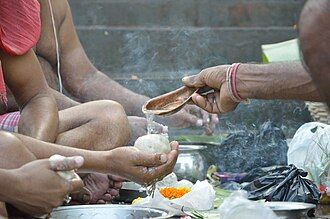
The Shiva linga abhishekam. The central ritual. Water, milk, yogurt, ghee, honey, and sugar (the panchamrit) are poured over a Shiva linga in succession. Each abhishekam is performed slowly, with mantras, while pouring water from a small kalash. Bel patra (leaves of the bilva tree, sacred to Shiva) are placed on the linga.
A traditional Maha Shivratri practice is to perform the abhishekam four times during the night, once per pahar. Some serious practitioners maintain a continuous abhishekam through all twelve hours, with different family members taking turns pouring.
Mantra recitation. The Maha Mrityunjaya Mantra and the panchakshari mantra (Om Namah Shivaya) are the most commonly recited. Many devotees do 108 repetitions per pahar, totaling 432 across the night. More ambitious practitioners do 1,008 or more.
Reading. The Shiva Purana, the Linga Purana, and the Rudra Adhyaya from the Yajurveda are traditional readings for the night. Many families read the entire Shiva Mahapurana over the four pahars.
Bhajan and kirtan. Communal singing of Shiva bhajans is common, especially in temples. In village settings, the bhajan goes on continuously through the night.
Temple visits. Devotees visit Shiva temples throughout the night. Major temples (Kashi Vishwanath, Mahakaleshwar in Ujjain, Bhojpur Shiva Mandir, the Pashupatinath in Nepal) stay open all night with continuous worship.
Fasting. Most practitioners observe a complete fast through the night and the day before. Some take only water and fruits. Some maintain a nirjala (waterless) fast. The fast is broken with prasad on the morning of amavasya.
A simpler practice at home
Not every devotee can maintain the full vigil. A simpler home practice:
Morning of Shivratri. Take a bath. Light a diya in the puja area. Recite the Mahamrityunjaya Mantra eleven times. Eat sattvic food only during the day.
Evening (sunset onwards). Perform a small abhishekam on the home Shiva linga or a small lingam image. Pour water and milk slowly. Offer bel patra. Recite Om Namah Shivaya 108 times.
Through the night. Stay awake as long as is reasonable. Read the Shiva Purana or watch a Shiva-related discourse on television. Keep the lamp burning.
Around midnight. Perform a second abhishekam. Recite the Maha Mrityunjaya Mantra 108 times.
Morning of amavasya. Take a bath. Break the fast with sattvic food. Visit a Shiva temple if accessible.
This simplified practice, while less intense than the full traditional vigil, still aligns the body and mind with the night's energy.
The Maha Mrityunjaya Mantra
The most important mantra of Maha Shivratri. From the Rig Veda:
Om Tryambakam Yajamahe Sugandhim Pushtivardhanam Urvarukamiva Bandhanan Mrityormukshiya Mamritat
We worship the three-eyed one (Shiva), fragrant and increasing wellbeing. May we be released from death, as a melon is released from its stem, but not from immortality.
This mantra is the principal mantra for healing, protection from untimely death, and longevity. Maha Shivratri is the most powerful single night of the year to recite it. The traditional recommendation: at least 108 repetitions on the night, ideally 1,008.
Maha Shivratri as a yogic festival
Maha Shivratri is, in the modern Isha and similar yogic traditions, observed as one of the principal nights of the year for sadhana. The Adi Yogi (Shiva as the first yogi) is held to have given the foundational yogic teachings on this night. The Adiyogi statue at Coimbatore was specifically consecrated on Maha Shivratri.
For those interested in this dimension of the festival, the recommended practice is more inward than ritual: stillness, meditation, asana, and the inward turning of attention through the four pahar. The night's natural rise in energy supports deep meditative work.
Even for non-yogic practitioners, the simple act of staying awake with disciplined attention through one full night, repeated annually, builds a kind of inner steadiness that is hard to develop any other way.
What changes
For those who have observed Maha Shivratri seriously for several years, the festival accumulates.
The first year is mostly mechanical. You stay awake. You perform the abhishekam. You recite the mantra. The mind wanders constantly. The body resists the sleep deprivation.
By the third or fourth year, the night begins to open. The mantra carries the practitioner more easily. The late hours, which used to drag, begin to feel different. The mind that was scattered comes into focus.
By the tenth year, the practitioner often reports a particular kind of experience on Maha Shivratri night that does not occur on other nights. A sense of presence. A quiet but unmistakable awareness of something the rest of the year does not show. This is what the shastras describe and what countless practitioners across generations have reported.
A closing observation
Maha Shivratri is one of the more demanding festivals in the calendar. It requires nothing materially (no expensive items, no elaborate food, no public display) but asks much in terms of personal discipline. A full night of vigil, with disciplined practice, in honor of a deity whose central image is a silent stone column.
The asymmetry is itself part of the teaching. Shiva is the deity of the inner work. The festival is structured to require that inner work directly. The night cannot be observed by proxy. The body has to stay awake. The mind has to stay engaged. The discipline has to be maintained.
If you have not observed Maha Shivratri seriously before, the night of 6 March 2027 is your opportunity. Start with three pahar. Build to all four in subsequent years. The mantra is simple. The practice is ancient. The night, when met with attention, has been changing practitioners for thousands of years.
Shiva is famously silent. The night, observed well, lets you sit with that silence. The rest of the year, the world will not be silent. This one night, the rishis say, is different.