
A few days after Tulsi Vivah, on the full moon of Kartik, the ghats of Varanasi are lit end to end. Lakhs of earthen lamps line the stone steps down to the Ganga, their reflections doubling on the water, while the river itself carries thousands more floated downstream. This is Dev Diwali, the Diwali of the gods, kept on Kartik Purnima, and it is among the most luminous sights in all of India.
Two names, one full moon
Kartik Purnima is the full moon day of the month of Kartik, and it gathers several observances onto a single date.
It is held to be the day Bhagavan Shiva destroyed the demon Tripurasura and his three flying cities, the Tripura, earning Shiva the name Tripurari. For this victory the gods are said to have descended to the earth, to Kashi, and celebrated with lights. That descent gives the day its most famous name in Varanasi: Dev Diwali, the festival of lights of the gods, observed fifteen days after the human Diwali.
The same full moon is also revered as the appearance day of Matsya, the first avatara of Vishnu, the fish who saved the Vedas and the seeds of life from the great deluge. And it is marked by Sikhs as Guru Nanak Gurpurab, the birth anniversary of Guru Nanak. One full moon, many lights.
Kashi on the night of lamps
Varanasi keeps Dev Diwali like nowhere else. Every one of the city's ghats is illuminated with rows of diyas, from Assi in the south to Rajghat in the north. The great ganga aarti is performed on a grand scale, with rows of priests moving large flaming lamps in unison to the sound of conch and bell. Boats fill the river so their passengers can see the whole sweep of the lit shoreline at once.
There is a particular meaning in Kashi hosting this festival. The city is Shiva's own, the place the tradition calls the eternal city, and on the night the gods themselves are said to have come down to celebrate, the city of Shiva becomes a single offering of light along the river.
The river and the lamp
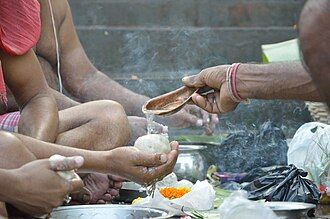
Kartik Purnima is also one of the holiest days of the year for the ritual bath, the snan, in the Ganga and other sacred rivers. Before dawn, pilgrims enter the cold water, and the act of bathing on this full moon in Kartik is held to carry great merit. Charity, fasting and the lighting of lamps mark the day across the country, not only in Varanasi.
The pairing of river and lamp is the festival's signature. Water that purifies and fire that illumines, the two oldest sacred elements, brought together on the brightest full moon of the season.
What the lights say
Dev Diwali completes an arc that began with Diwali itself. The human festival welcomed light into the home; this one imagines the gods descending to add their own. The message is the same one the season keeps repeating in different keys: that light is worth gathering, worth multiplying, worth setting on the water and the steps until the dark has nowhere left to stand.
If you can, stand on a ghat in Kashi on this night once in your life. And wherever you are, light a lamp on the Kartik full moon and set it where it will be seen.