The festival that defies prediction
Of all the festivals in the Sanatani calendar, Holi is the most unruly. Other festivals are structured: vrats are kept, mantras are recited, lamps are lit at the correct time. Holi explodes.
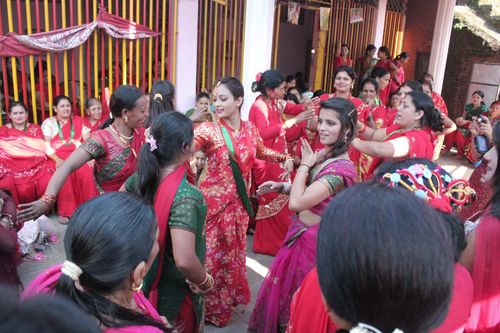
Powder is thrown without warning. Strangers become participants. Hierarchy temporarily collapses. The married woman who has spent her year keeping the household running ends the day soaked in coloured water, laughing in a way she does not laugh the rest of the year. The boss and the employee dance in the same drumbeat. The elder and the youngest are equally drenched.
This is Holi. It is the only major Sanatani festival whose primary mode is play. In 2027, Holi falls on 2 March (Holika Dahan the evening of 1 March, the colour play on 2 March).
This article walks through what Holi means, where it comes from, and how to observe it well, both in tradition and in modern urban life.
The two stories underneath
Holi is anchored in two distinct narrative traditions that combine into the festival's modern character.
The Prahlad and Holika story. Hiranyakashipu, a powerful asura king, demanded that his subjects worship him as supreme. His own son Prahlad refused, remaining devoted to Vishnu. Hiranyakashipu attempted repeatedly to kill his son. Each attempt failed through Vishnu's protection.
Finally, the king turned to his sister Holika, who had a boon that made her immune to fire. She sat on a pyre with Prahlad in her lap. When the fire was lit, Holika's boon failed (because she misused it) and she burned. Prahlad, protected by his devotion, emerged unharmed.
The Holika Dahan, the ritual bonfire lit on the eve of Holi, commemorates this. It is the burning of evil, the survival of devotion, and the start of the festival.
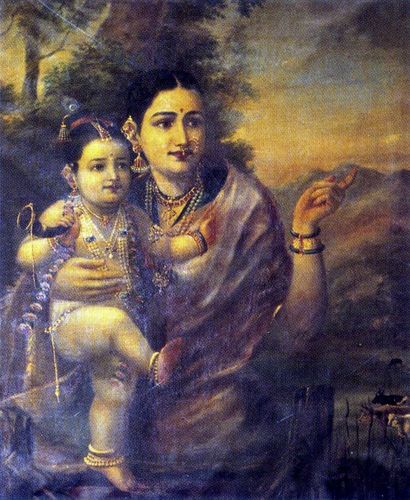
The Krishna and Radha story. As a boy in Vrindavan, Krishna was teased about his dark skin while Radha's complexion was fair. Yashoda, his mother, told him in jest to colour Radha's face whatever shade he wanted. Krishna took this seriously. He smeared Radha and the gopis with coloured powders, beginning a playful game that grew into a community-wide tradition.
The colour-play of Holi descends, by tradition, from this. The festival's colours are still most strongly associated with the Krishna-Radha legend in north India, particularly in Mathura and Vrindavan where Holi reaches an intensity not seen anywhere else.
The structure of the festival
Holi unfolds over two days, though the buildup extends a week or more in some regions.
Holika Dahan (1 March 2027 evening)
The eve of Holi. A community bonfire is built, traditionally with wood, dried cow dung, and a small effigy of Holika placed at the top.
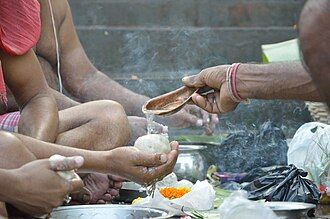
In the evening, after sunset, the fire is lit. Families gather around it. Songs are sung. Offerings are made to the fire: coconut, grains, sweets. The fire is circumambulated, sometimes three times, sometimes seven, depending on tradition.
The Holika Dahan is observed in nearly every Sanatani neighbourhood. In village settings, the bonfire is enormous, central, and gathers everyone. In urban apartment complexes, smaller community fires serve the same purpose.
Many families bring a small portion of unburnt ash home the next morning and apply it as a tilak. The ash is considered protective for the year ahead.
Holi / Dhulandi (2 March 2027)
The main festival day. The colour play.
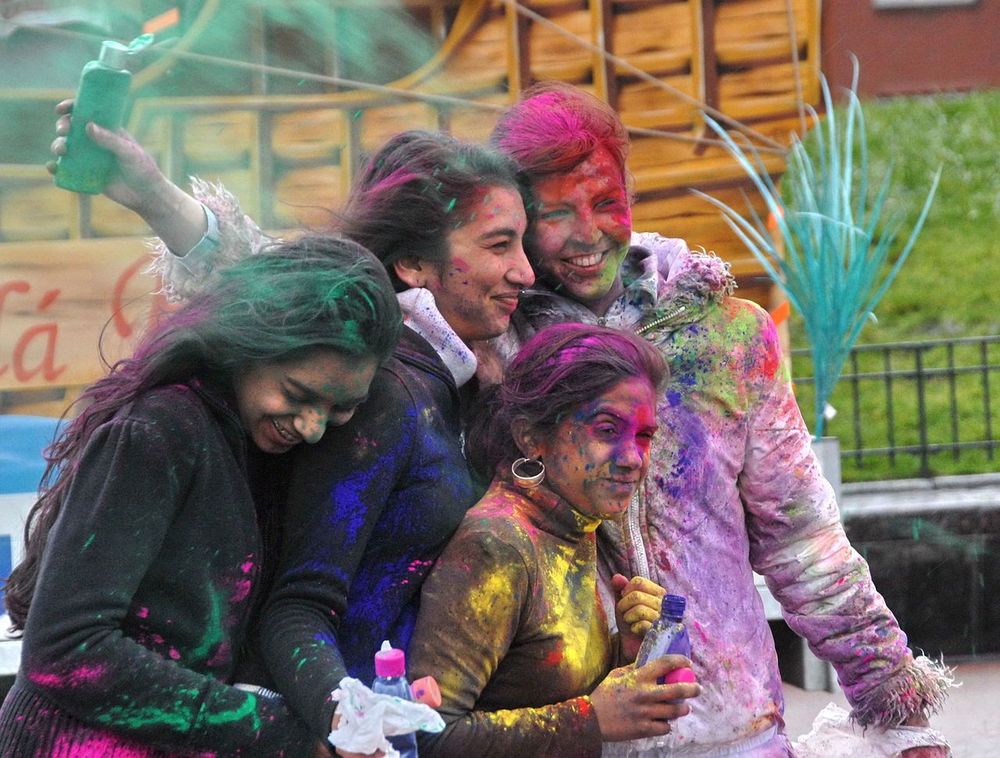
Traditional practice starts in the morning. Families and friends gather at someone's home or in the neighbourhood. Coloured powders (gulal) and coloured water (often mixed in pichkaris, the festival's hand-held water shooters) are used to drench everyone in colour.
The festival's traditional foods are also distributed: gujiya (a sweet pastry filled with khoya and nuts), thandai (an almond-and-spice cold drink, sometimes mixed with bhang for adult participants), malpua, and savory snacks like dahi vada.
By afternoon, the colour play winds down. People bathe. Clothes are changed. Families visit each other in the evening, often bringing sweets.
The deeper meaning
Holi does several things that other festivals do not.
Temporary suspension of hierarchy. During Holi, normal social distinctions are explicitly suspended. The boss and the employee, the elder and the younger, the rich and the poor, can drench each other in colour without offence. This was, in earlier times, a kind of pressure-release valve for hierarchical societies. The hierarchy returned the next day, but it had been briefly recognized as a human construction rather than a cosmic one.
The seasonal alignment. Holi falls at the start of spring, after the last cold of winter. The festival corresponds to the body's natural impulse to come out of winter's stillness and into motion. The colours, the music, the physical play, the rich foods, all match what the body has been waiting for.
The community formation. Holi is one of the few festivals where the community gathers in public and physically interacts. Family rituals like Diwali happen in homes. Temple rituals like Maha Shivratri happen at shrines. Holi happens in the street. The festival reweaves the local community in a way that almost nothing else does.
The sustained play. Most adult Sanatani life is structured. Work has its discipline, family has its responsibilities, ritual has its protocols. Holi is the day when adult Sanatanis are explicitly given permission to play like children. The psychological benefit of this annual permission, for adults who otherwise carry serious burdens, is real.
How to observe Holi well
A few practical suggestions:
Use organic colours. The chemical colours sold cheaply often contain heavy metals, asbestos, and skin irritants. Natural colours made from turmeric, beetroot, henna, and other plant sources are widely available now and are vastly better for skin, hair, and the environment. Prefer them.
Apply oil generously before playing. Coconut oil on hair, on skin, on the body, before going out to play. This prevents the colours from staining and makes them easier to wash off.
Cover the hair. A scarf or cap protects the hair from harsh dyes.
Wear old clothes. White is traditional. White shows the colours best. But the clothes will be stained beyond recovery; do not wear anything you want to keep.
Drink responsibly. Thandai with bhang is traditional but causes severe disorientation and dehydration in those not used to it. If you choose to participate, do so in moderation and only at the start of the day.
Respect refusal. Not everyone wants to be drenched. Children, the elderly, people in important business clothing, people from cultures unfamiliar with the festival. A clear "bura na mano" custom exists for asking permission. Use it.
Avoid wastage of water. Some Holi traditions use enormous quantities of water for the pichkaris. In a country where water is increasingly scarce, the modern Sanatani approach is to use dry colours predominantly and water sparingly.
Help the cleanup. After play, the neighbourhood is covered in colour residue. Many communities now organize collective cleanups the following morning. Participating is itself a form of dharma.
What Holi can be in cities
Urban Holi has changed substantially. The village forms of the festival, with the community gathering in a single space, are harder to replicate in apartment-block life. Two adaptations have emerged.
Society Holi events. Most residential complexes now organize official Holi events in their common areas, with music, food, and structured colour-play. This is the modern equivalent of the village square gathering.
Private Holi parties. Many urban Sanatanis attend smaller private gatherings at friends' homes, often combined with brunches that include the traditional foods. This is the modern equivalent of the home-and-friend gathering.
Both work. The festival's basic logic, communal colour play with food and music, survives in both.
The thing that has been lost in urban settings is the spontaneous neighbourhood gathering: stepping out of one's home in the morning and finding the entire community in the street. This was a sociological feature of village life that apartment living does not naturally support. Some apartment communities now deliberately recreate this by having an open-door morning policy for two hours on Holi day.
A note on safety
Holi is mostly safe but a few cautions:
Drowning. Several deaths happen every year from people falling into water bodies (sometimes voluntarily, sometimes pushed) while intoxicated. Stay away from rivers, pools, and lakes if intoxicated.
Eye injuries. Colours in the eye, especially chemical colours, can damage corneas. Eye protection (sunglasses) is worth wearing during heavy colour play.
Heat. Holi is in early spring but already warm in many Indian cities. Drink water. Take breaks. Do not stay out in direct sun for the full day.
Roads. The streets are full of people in the morning. Avoid driving during peak Holi hours unless necessary.
Closing
Holi in 2027 falls on 2 March. The festival has been observed in this rough form for at least two thousand years, with Vedic and Puranic references that suggest considerably longer. It survives because it does something for the Sanatani community that no other festival does: it gives a single day per year for collective, unstructured, public play.
Whether you celebrate quietly with friends or fully in the neighbourhood gathering, observe Holi this year. The festival has been waiting through the cold winter. The colours have been waiting through the gray months. The body has been waiting to come out of winter's stillness.
Wear old white clothes. Apply oil. Use organic colours. Step out in the morning. Drench someone. Be drenched. Eat the gujiya. Drink the thandai. Laugh more than you have in months.
The festival, done well, sends you back to work the next day a small but measurable degree lighter than you were the day before Holi. That is what it is for. That is why it has lasted.