
Knowledge has to be handed down. No one arrives knowing.
Guru Purnima is the day the tradition turns and faces the people who handed it down. It falls on the full moon of Ashadha. This year that is 11 July 2026.
Vyasa Purnima
The day has an older name: Vyasa Purnima. It honours Veda Vyasa, who arranged the Vedas, composed the Mahabharata, and is counted as the first guru of the lineage. Every teacher who came after is understood to stand in his line.
The word guru is often translated as teacher. The traditional gloss goes further. Gu is darkness. Ru is the one who removes it. A guru is not someone who adds information. A guru is someone who removes what keeps you from seeing.
What is being honoured
Not a personality. A function.
The Upanishads describe knowledge passing from teacher to student in silence as often as in speech. The student sits near. This is the literal meaning of upanishad: to sit down close. What passes in that nearness is not only the content of the teaching. It is the living example of someone who has walked the path.
A person can read every scripture alone and still miss the door. The guru points to the door. That is the whole service, and it is why the tradition says the debt to a true teacher cannot be repaid. You cannot pay back the one who showed you what you are.
The teacher is not always a person
The tradition is generous about who qualifies. A parent is a guru. A book read at the right moment is a guru. The Avadhuta in the Bhagavata names twenty four teachers, among them the earth, the wind, a moth, a child. Anything that removed a layer of your darkness taught you something.
Guru Purnima is the day to remember all of them at once.
How to keep the day
The practice is plain.
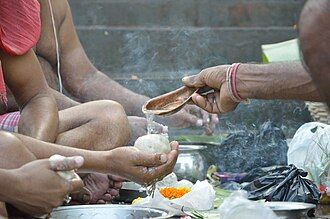
Sit for a while in the morning. Bring to mind the people who taught you, the ones whose names you know and the ones you have forgotten. Say their names if you wish. The full moon is traditionally a time for japa and for reading, so read a few lines of something that once changed you, slowly, the way it was meant to be read.
If you have a living teacher, this is the day to go, or to call, or to write. The form does not matter. The turning toward them does.
There is an old instruction that fits the day. Light one lamp from another, and the first lamp loses nothing. The teacher gives away the flame and keeps it. On Guru Purnima, the student says thank you for the flame.