
There is one night a year when the whole country seems to be made of light. Diyas line every doorstep and window ledge. Whole streets glow. The sky cracks with colour. Diwali, the festival of lights, is the largest celebration in Sanatan dharma, and beneath the firecrackers and the sweets and the new clothes lies one of the oldest images we have: light returning to drive out darkness.
Not one story but several
Ask people why they celebrate Diwali and you will get different answers depending on where they come from, and all of them are true.
In the north, Diwali marks the return of Bhagavan Ram to Ayodhya after fourteen years of exile and his victory over Ravana. The people of Ayodhya are said to have lit rows of lamps to welcome their king home, and we light them still. In the west and among business communities, the night belongs to Lakshmi, the goddess of fortune, who is invited into clean and lit homes. In Bengal and the east, the same night is Kali Puja. Jains mark the liberation of Mahavira, and Sikhs the release of Guru Hargobind, on the same days.
One festival, many doors, one meaning: the welcoming of light and good into the home and the life.
Five days of celebration
Diwali is not a single day but a sequence of about five.
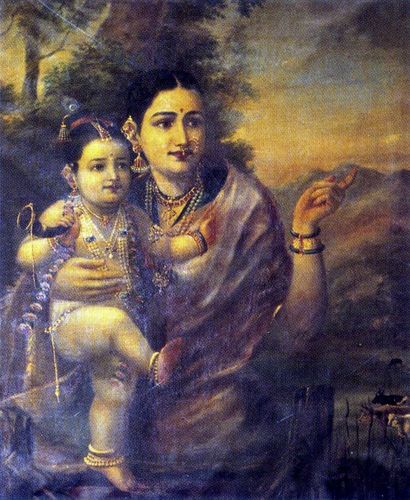
It opens with Dhanteras, the day of Dhanvantari and of auspicious buying. Then comes Naraka Chaturdashi, or Choti Diwali, marking Krishna's slaying of the demon Narakasura. The main night is Lakshmi Puja, the new moon of Kartik, when the goddess is worshipped and the lamps are at their fullest. The next day is Govardhan Puja, remembering Krishna lifting the hill. The fifth is Bhai Dooj, a day for the bond of brothers and sisters, a gentle echo of Raksha Bandhan.
The whole arc moves from health, to the defeat of a demon, to the worship of fortune, to gratitude, to family.
Lakshmi Puja night
The central evening has a quiet logic to it. Homes are cleaned thoroughly in the days before, because Lakshmi is said to enter only where there is order and light, and to pass by the neglected and the dark. Rangoli is laid at the threshold to welcome her. Lamps are lit at every doorway and window, so that no corner is left dark.
In the evening, families perform Lakshmi Puja, often alongside Ganesha, asking for wellbeing and prosperity in the year ahead. Then come the sweets, the lights, the visiting of neighbours, and the long bright night.
A gentler Diwali
The festival's heart is the lamp, not the firecracker. The diya is the older symbol, and the more meaningful one: a small flame holding back a great darkness, multiplied across a whole household and a whole land. In a time of poor air and anxious cities, a Diwali rich in lamps and light on crackers loses nothing of its spirit, and gives something back to the sky everyone shares.
Keep the lights. Clean the home. Lay the rangoli. Light the diyas at every threshold. Worship Lakshmi with your family, share what is sweet, and remember the simple thing the festival has always said.
What the lights mean
Strip away the spectacle and Diwali makes a single ancient claim: that darkness, however large, yields to light, however small. The exile ends and the king comes home. The demon falls. Fortune enters the lit house. The new moon, the darkest night, is exactly the night we choose to fill with flame.
That is the festival's quiet defiance, kept for thousands of years. Light a lamp against the dark, and you have understood Diwali.