
The day after Diwali, in many homes, the worship turns from a goddess to a hill. A small mountain of food is built, dozens of dishes heaped into a mound and offered to Krishna. This is Govardhan Puja, also called Annakut, the mountain of food, and behind it lies one of the most quietly revolutionary stories Krishna ever set in motion.
The hill that was lifted
The account is from the Bhagavata Purana. The cowherds of Vrindavan prepared, as they did each year, to worship Indra, the king of the gods and the bringer of rain, hoping for good monsoon and full pastures.
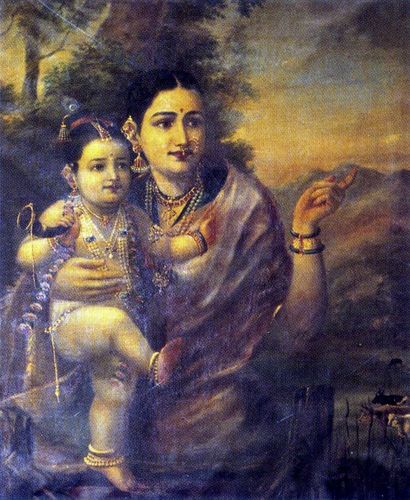
The young Krishna stopped them. Why worship a distant king of the heavens, he asked, when it is Govardhan hill that gives your cattle grass, and the forest that sustains you, and your own honest work that feeds you? Worship what actually nourishes you. The villagers, persuaded, offered their puja to the hill instead.
Indra, slighted, sent a furious storm to drown Vrindavan in punishment. The rain fell without stopping. And Krishna lifted the entire Govardhan hill on the little finger of his left hand and held it up like an umbrella, sheltering every villager and every animal beneath it for seven days, until Indra, humbled, withdrew the storm and bowed.
What the story is really saying
This is not a tale about defeating a god. It is about where reverence belongs.
Krishna redirects worship from a remote authority demanding tribute to the immediate, tangible sources of life: the hill, the cattle, the land, the labour of one's own hands. It is a teaching against worship offered out of fear, and for gratitude offered to what genuinely sustains us. The pride of Indra falls; the dignity of ordinary work and ordinary nature rises.
The lifted hill adds the second half. When the villagers honoured what truly nourished them and stood with Krishna, he sheltered them completely. Trust placed rightly is protected.
The mountain of food
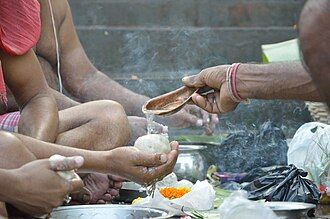
Govardhan Puja enacts both halves. A hill of food is built, the Annakut, sometimes a small mound at home, sometimes an enormous spread of fifty-six dishes, the chhappan bhog, in temples. It is offered to Krishna in the form of Govardhan, and then shared as prasad among all.
The image is deliberate. The villagers offered the hill their gratitude, and the festival offers a hill made of the very food the land provides. Cattle are honoured and decorated on this day too, remembering the cows of Vrindavan that Krishna protected.
How it is kept
In homes, a small representation of Govardhan is often made from cow dung or food, decorated, and worshipped, and the Annakut is offered and then eaten together. In the temples of Mathura, Vrindavan and Nathdwara, the day is among the grandest of the year, the deity surrounded by mountains of offerings.
The teaching travels well into a modern life. Govardhan Puja is a day to be grateful for what actually feeds you, the work of your hands, the people who grow and cook your food, the ordinary earth, rather than for distant things imagined to control your fate. Build a small hill of food, offer it with thanks, and share every bit of it.