The four corners
Four shrines, set deliberately at the four cardinal directions of Bharatvarsha. Badrinath in the high Himalayas, Dwarka on the Arabian Sea, Jagannath Puri on the Bay of Bengal, Rameshwaram at the southern tip. Together they form the Char Dham, the four sacred residences of the divine that every Sanatani is traditionally expected to visit at least once in life.
The four were set in their current configuration by Adi Shankaracharya in the eighth century CE, when he established a matha at each. But the shrines themselves are older, often much older. The arrangement is geometrical, intentional, and surprisingly precise: a quadrilateral covering nearly two thousand kilometres on its longest diagonal, anchoring the spiritual map of the subcontinent.
To do the Char Dham is to walk the boundary of the tradition's home.
This article is a complete pilgrim's guide: what each shrine is, when to go, how to plan, what to do, and what to expect.
A note on naming
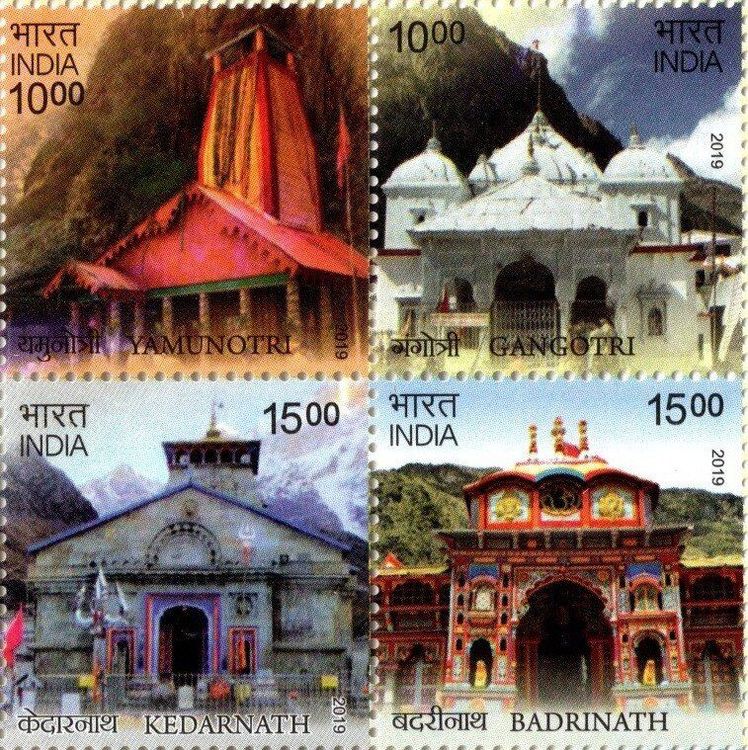
"Char Dham" is used in two distinct ways. The classical Char Dham refers to the four pan-Indian shrines: Badrinath, Dwarka, Puri, Rameshwaram. The Himalayan or "Chota Char Dham" refers to four Himalayan shrines: Yamunotri, Gangotri, Kedarnath, Badrinath, all within Uttarakhand.
This guide covers the classical pan-Indian Char Dham. The Himalayan circuit is treated as a separate tradition.
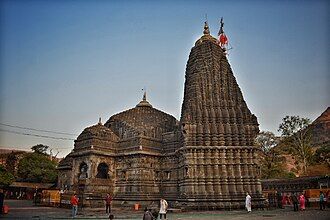
Badrinath: the northern dham
Location: Chamoli district, Uttarakhand, at 3,300 metres in the high Himalayas.
Deity: Bhagwan Vishnu in his Badrinarayan form, seated in meditation on a stone throne.
Story: This is where Vishnu performed centuries of tapasya, meditating under a wild jujube (badri) tree which Lakshmi, in plant form, sheltered him from the snow. The temple marks that spot. The murti is of black stone, severe and meditative.
When to visit: The temple is open only from late April or early May to mid-November. Snow closes the road for the rest of the year. The optimal season is May, June, and September. Avoid July-August (monsoon) due to landslide risk on the approach.
How to reach: Fly to Dehradun or Delhi, road to Rishikesh, then a 10-12 hour mountain drive via Rudraprayag, Karnaprayag, and Joshimath. The final stretch from Joshimath to Badrinath is a high-mountain road that has been improved considerably in the last decade.
What to do: Bathe in the Tapt Kund (hot springs) before darshan. Visit the Brahma Kapal a few hundred metres from the temple, where pindas are offered for ancestors. Walk up to Mana, the last Indian village before Tibet, four kilometres away.
Dwarka: the western dham
Location: Devbhoomi Dwarka district, Gujarat, on the Arabian Sea coast.
Deity: Bhagwan Krishna, in his form as Dwarkadhish (Lord of Dwarka).
Story: Krishna established Dwarka as his capital after leaving Mathura, ruling here as king for over a hundred years. The city sank into the sea after Krishna left his earthly body, by Krishna's own decree. Underwater archaeological surveys near present-day Dwarka have found ruins consistent with an ancient submerged port city, lending some empirical support to the traditional account.
When to visit: October to March is comfortable. Avoid April-June (extreme heat) and July-September (monsoon).
How to reach: Fly to Jamnagar or Rajkot, then a 2-3 hour road journey. Direct trains from major cities to Dwarka station.
What to do: Darshan at the Dwarkadhish temple, the central shrine. Boat trip to Bet Dwarka, an island 30 kilometres offshore where Krishna's residence was. Visit Nageshwar, one of the twelve Jyotirlingas, on the way. The famed underwater archaeological site can be visited via diving expeditions arranged from the port.
Jagannath Puri: the eastern dham
Location: Puri district, Odisha, on the Bay of Bengal.
Deity: Bhagwan Jagannath, "the Lord of the Universe," along with his brother Balabhadra and sister Subhadra. The three are represented by unusual carved wooden idols with large eyes and short arms, a form unique in all of Sanatani iconography.
Story: The form of Jagannath comes from a long, layered tradition. The current temple was built in the 12th century by King Anantavarman Chodaganga Deva of the Eastern Ganga dynasty. The temple's Rath Yatra (chariot festival), held every June or July, is one of the largest religious processions in the world: three enormous wooden chariots are pulled by hundreds of thousands of devotees through the streets of Puri.
When to visit: October to March is most comfortable. Rath Yatra in June-July is spectacular but extremely crowded. Avoid April-May (heat) and the monsoon.
How to reach: Fly to Bhubaneswar, then a 1-hour road or rail journey to Puri.
What to do: Darshan at the main temple (note: only Hindus are allowed inside). Visit the Gundicha Temple, where the deities go during Rath Yatra. The Mahaprasad of Jagannath, prepared in massive earthen pots and considered uncontaminated by any worldly distinction, is a unique experience. Walk on Puri beach at sunrise.
Rameshwaram: the southern dham
Location: Pamban Island, Ramanathapuram district, Tamil Nadu, in the Gulf of Mannar.
Deity: Ramanatha Swamy, Shiva worshipped as the lingam consecrated by Bhagwan Ram himself.
Story: After defeating Ravana and rescuing Sita, Ram performed a Shiva pratishtha here to atone for the brahmin-hatya dosha incurred by killing Ravana (who was, by birth, a brahmin). Ram needed a lingam quickly; he sent Hanuman to fetch one from Mount Kailash. While waiting, Sita made a smaller lingam from sand, which Ram consecrated. When Hanuman returned with the Kailash lingam, both were installed. Both are still worshipped at Rameshwaram.
When to visit: October to April is the comfortable season. Avoid May-September (extreme heat and monsoon on the eastern coast).
How to reach: Fly to Madurai, then a 4-hour road journey, crossing the Pamban Bridge to reach the island. Or train directly to Rameshwaram station.
What to do: Darshan at the Ramanatha Swamy temple, famous for its enormously long corridors (the longest temple corridor in India). Bathe in the 22 sacred wells inside the temple complex, each with different water. Visit Dhanushkodi, the southern tip of the island where Ram is said to have built the Setu Bandhan (the bridge to Lanka). The Adam's Bridge land formation, visible from Dhanushkodi, has long been associated with this tradition.
Planning a complete Char Dham yatra
The four dhams form a rough quadrilateral. The optimal route, in terms of distance and seasonal access, is:
Sequence 1 (Spring to Autumn):
- Dwarka (March-April, before the heat)
- Rameshwaram (March-April or later October)
- Puri (October-November)
- Badrinath (May-June or September-October)
This involves four separate trips, one per dham, over the course of a year. This is the traditional pattern.
Sequence 2 (Compressed): Two trips, each covering two dhams.
Trip A: Dwarka + Rameshwaram (west + south). Combined road travel is long but doable across a 10-14 day journey.
Trip B: Puri + Badrinath (east + north). Even longer, requires careful seasonal planning since Badrinath's window is narrow.
Sequence 3 (All in one): A single Char Dham yatra in 30-45 days, by road or rail, hitting all four. This is increasingly common but quite demanding physically.
Practical guidance
Pandits and pinda daan: At each dham there are traditional pandits who facilitate puja and pinda offerings for ancestors. Use a recommended pandit. Tourist-area pandits who approach you aggressively are often unreliable.
Mahaprasad/Mahabhog: Each dham has its specific prasad tradition. Eat it. The community kitchens at all four are part of the experience.
Stay choices: Most pilgrims stay in dharamshalas associated with the temple or in budget hotels. Premium hotels exist at Dwarka and Puri but are limited at Badrinath and Rameshwaram.
Physical preparation: Badrinath in particular involves altitude (3,300m). If you have heart conditions, consult a doctor first. Acclimatize at Joshimath (2,800m) for at least a day before going up.
Sankalpa: Most pilgrims, before starting any of the dhams, formally take a sankalpa (an intention) for the yatra. The pandit at the dham can guide this. Some people undertake the Char Dham in memory of a deceased parent, some for personal sankalpa, some without specific intent. All are valid.
What the yatra does
The Char Dham is a pilgrimage of geographical scale. By walking from the Arabian Sea to the Bay of Bengal, from the Himalayas to the southern tip, the pilgrim physically traces the territory the tradition calls home. Many pilgrims describe a shift after completing it: a sense of the subcontinent as an unified spiritual landscape, not just a geographic one.
The shastras claim that the Char Dham yatra accumulates significant punya. The texts also say that the pilgrim returns changed. Whether you believe the metaphysical claim or not, the practical observation is verifiable: people who complete the Char Dham generally describe it as one of the more transformative experiences of their lives.
A closing thought
Shankaracharya, having walked the length of Bharatvarsha three times in his short life, knew what he was doing when he set the four dhams at the four corners. He made the practice of pilgrimage itself a teaching about scale, about effort, and about the unity of the tradition.
You do not need to do all four in one lifetime. The Sanatani who has done even one of the four has, by tradition, done substantial work. The Sanatani who has done all four has walked the inner perimeter of his own civilization.
Begin where the season allows. The dham is waiting. The road has been walked by Sanatanis for over a thousand years. You will not be the first; you will not be the last. But while you are walking, the road is yours.