Mythological Figures That Shaped the Cosmos
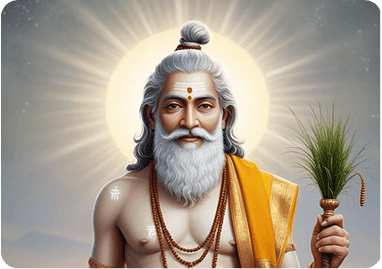
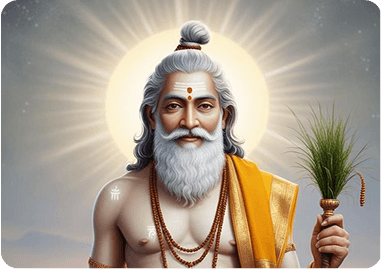
Uncover the divine roles, virtues, and powers of deities and epic heroesBhagwan Ved Vyas
Vyasa was a legendary Indian sage who is traditionally credited with composing or compiling the Mahabharata, a collection of legendary and didactic poetry worked around a central heroic narrative. In India his birthday is celebrated as Guru Purnima, on Shukla Purnima day in the month of Ashadha (June–July).
According to legend, Vyasa was the son of the ascetic Parashara and the dasyu (aboriginal) princess Satyavati and grew up in forests, living with hermits who taught him the Vedas (ancient sacred literature of India). Thereafter he lived in the forests near the banks of the river Sarasvati, becoming a teacher and a priest, fathering a son and disciple, Shuka, and gathering a large group of disciples. Late in life, living in caves in the Himalayas, he is said to have divided the Vedas into the four traditional collections, composed Puranas, and, in a period of two and a half years, composed his great poetic work, the Mahabharata, supposedly dictating it to his scribe, Ganesha, the elephant god.
Karwa Chauth Katha
Karwa Chauth is very popular and significant day among Hindu women especially in North India. Karwa Chauth is mainly observed in the states of Rajasthan, Uttar Pradesh, Punjab, Haryana, Madhya Pradesh and Himachal Pradesh.
It is also significant day in Delhi and NCR (National Capital Region) due to large number of Punjabi families following the tradition of Karwa Chauth with full devotion. It would not be wrong to say that the several rituals related to Karwa Chauth which have become popular in northern India are either formed or influenced by the local culture in Delhi.The tradition of Karwa Chauth is followed by married women only. Most married women observe a day long fast for the long life and well-being of their husband. The fasting on the day of Karwa Chauth is observed without any food. Most women even don’t drink a single drop of
special stories and anecdotes

बाल लीलाएं: श्री गणेश जी के बचपन की कहानियाँ